01
What is the main concern?
Clarify whether your priority is overall skin quality, under-eye appearance, texture, visible dehydration, pores, scars or localized volume-related concerns.
Both Rejuran and Juvelook are confirmed Newline skin-booster categories. The useful comparison is not “which is universally better,” but which product, amount and treatment area better match your concern, recovery window, travel schedule and current budget.
Compare the treatment goal, product version, amount and area — not just the product name.
Newline lists several Rejuran and Juvelook variants. A 1cc under-eye-oriented Rejuran option, a 2cc Rejuran Healer treatment, a 4cc or 8cc Juvelook Booster session and a localized Juvelook Volume treatment are not interchangeable simply because they are all called skin boosters. The treatment plan starts with what you want to improve and which area is being treated.
Clarify whether your priority is overall skin quality, under-eye appearance, texture, visible dehydration, pores, scars or localized volume-related concerns.
Newline lists Rejuran I, HB and Healer separately, and Juvelook Booster and Juvelook Volume separately. Confirm the exact product before comparing prices.
Compare cc or vial quantity. A lower headline price may simply reflect a smaller amount or a different target area.
Under-eye, full-face and localized treatment areas have different planning considerations. One product should not be assumed to fit every area.
Temporary bumps, injection marks, redness, swelling, tenderness or bruising can occur. If you have photos or events, tell Newline before treatment.
International patients should share flight, KTX, cruise or hotel schedules. There is no single same-day travel rule for all injectable treatments.
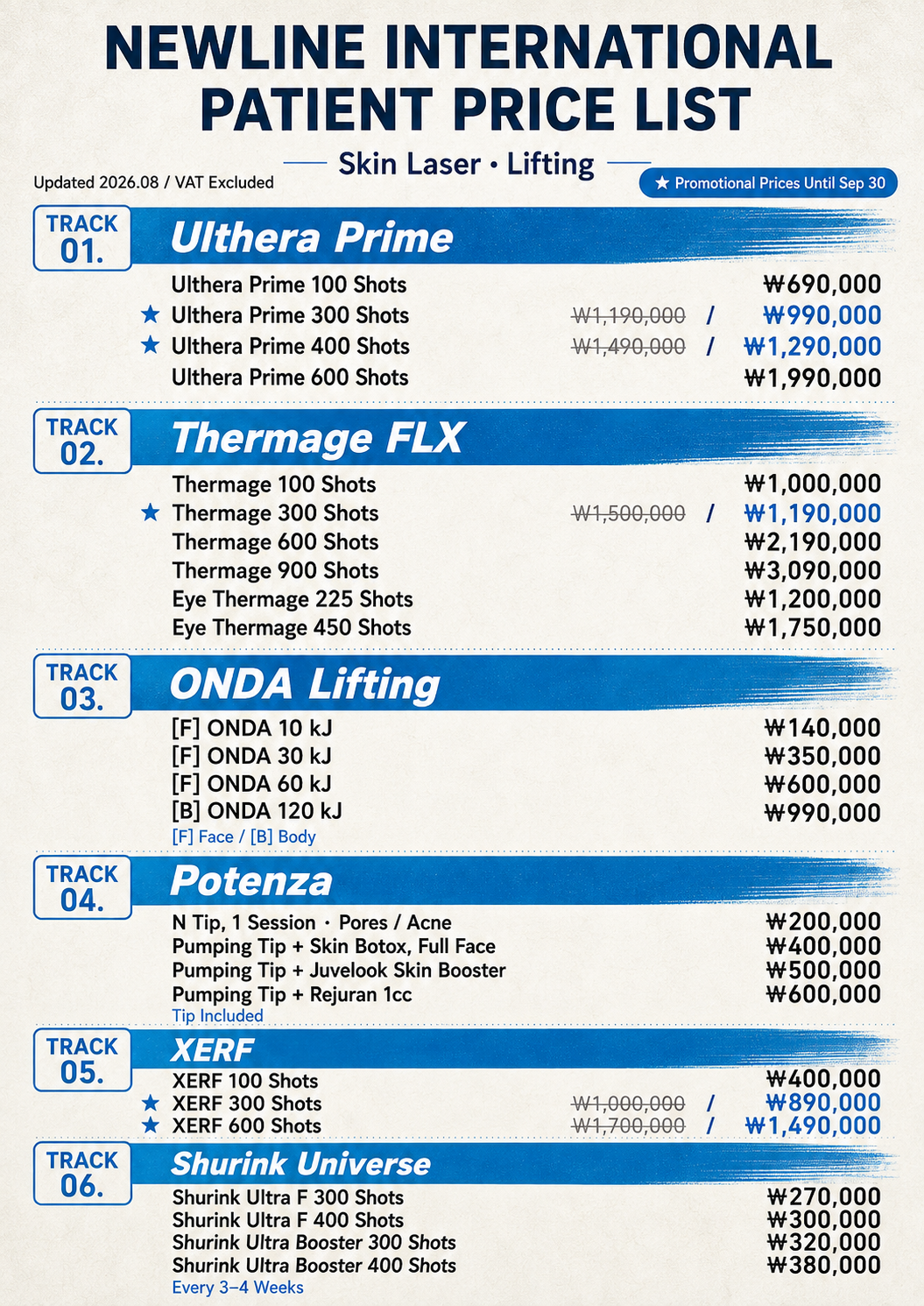
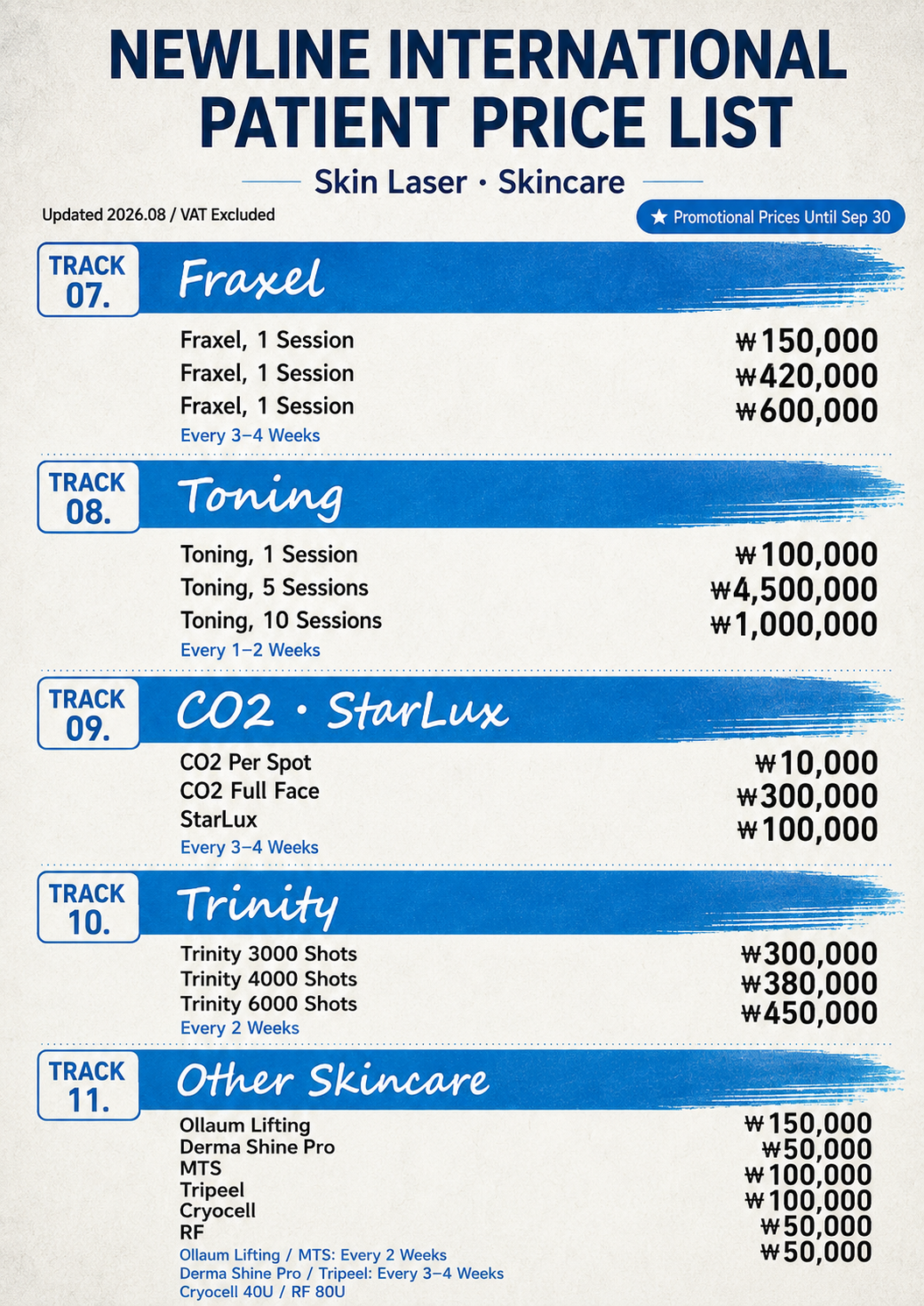
Newline also offers Potenza, Fraxel, Laser Toning and lifting devices. Timing around injectables should be decided as part of one overall plan.
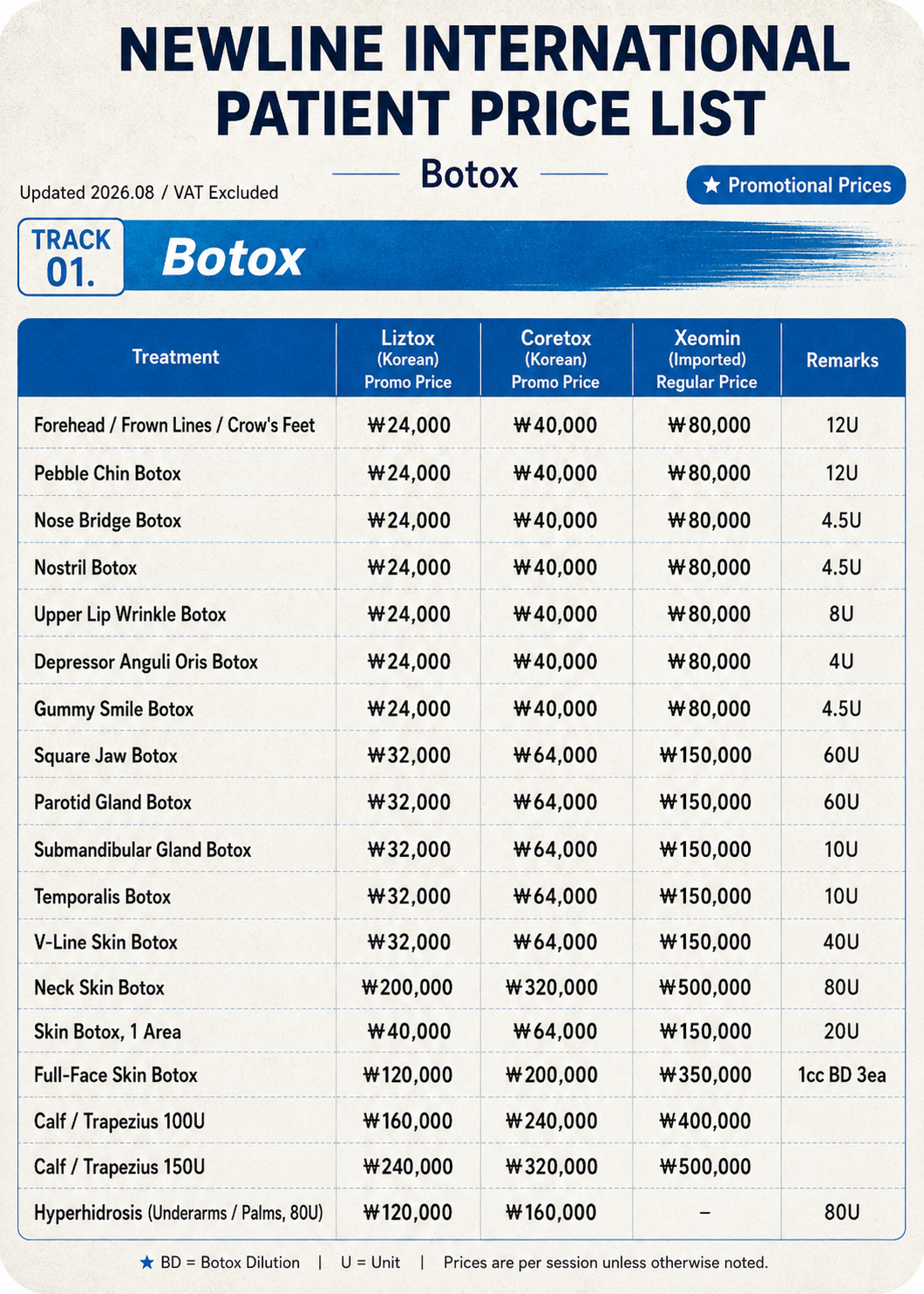
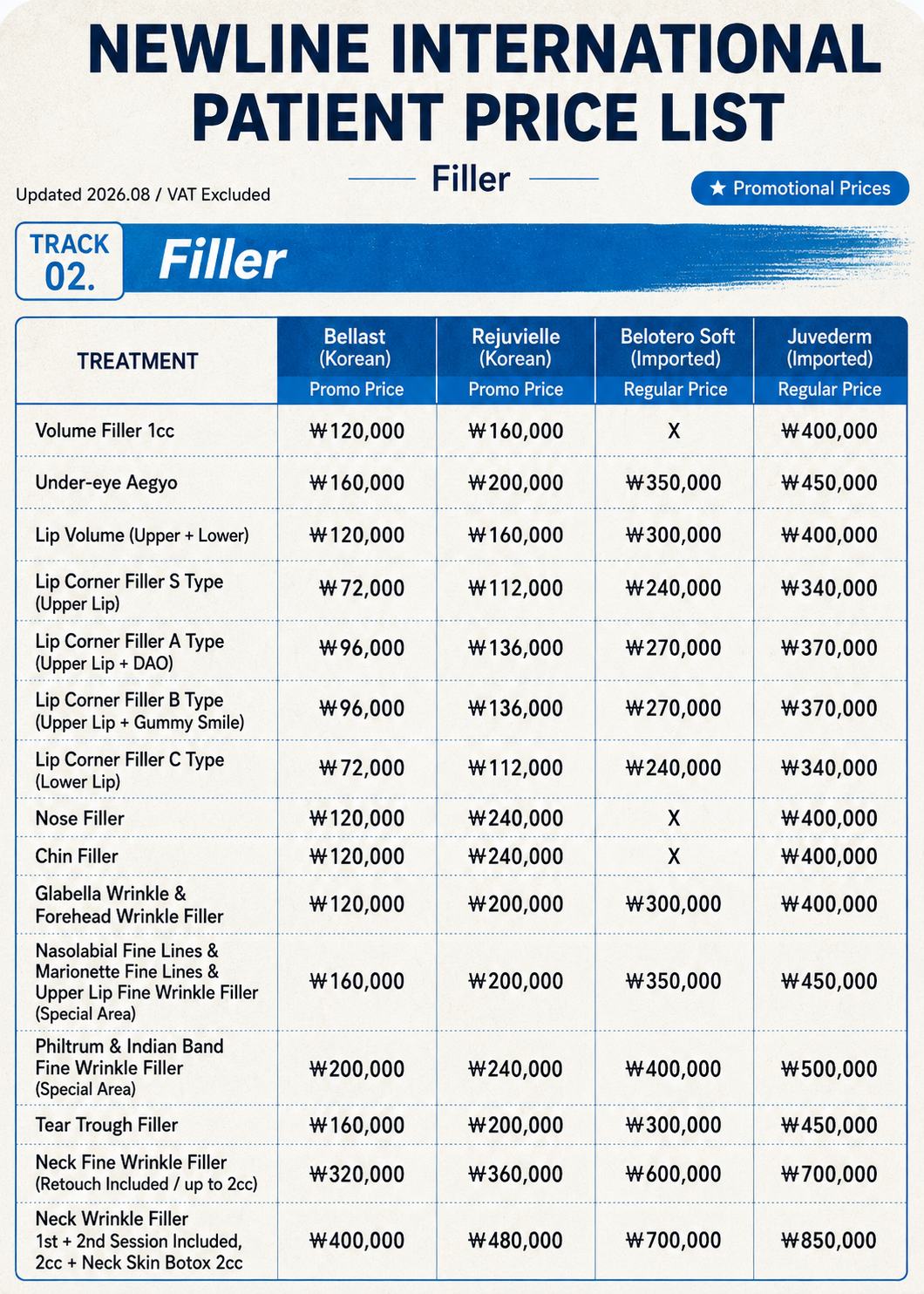
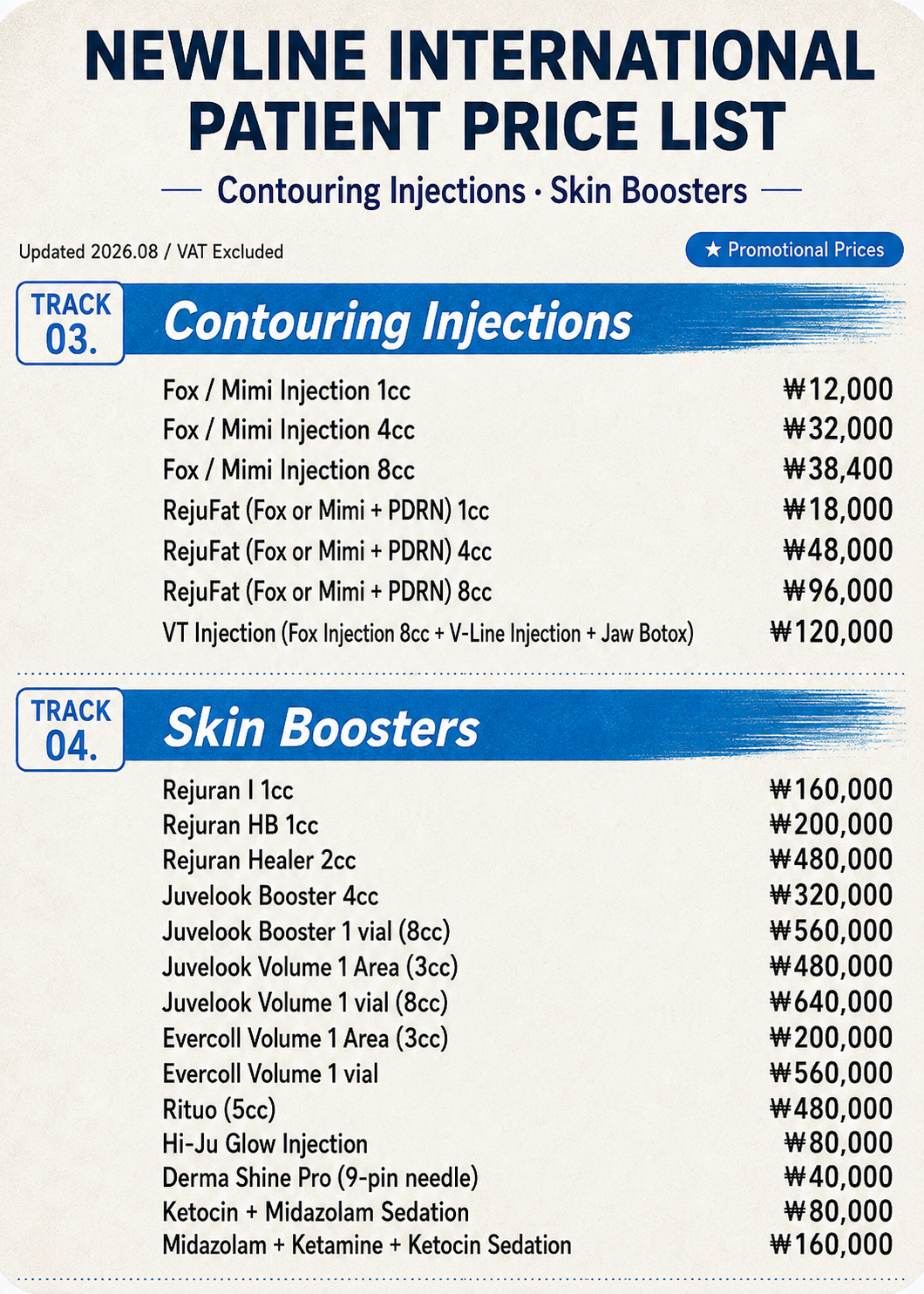
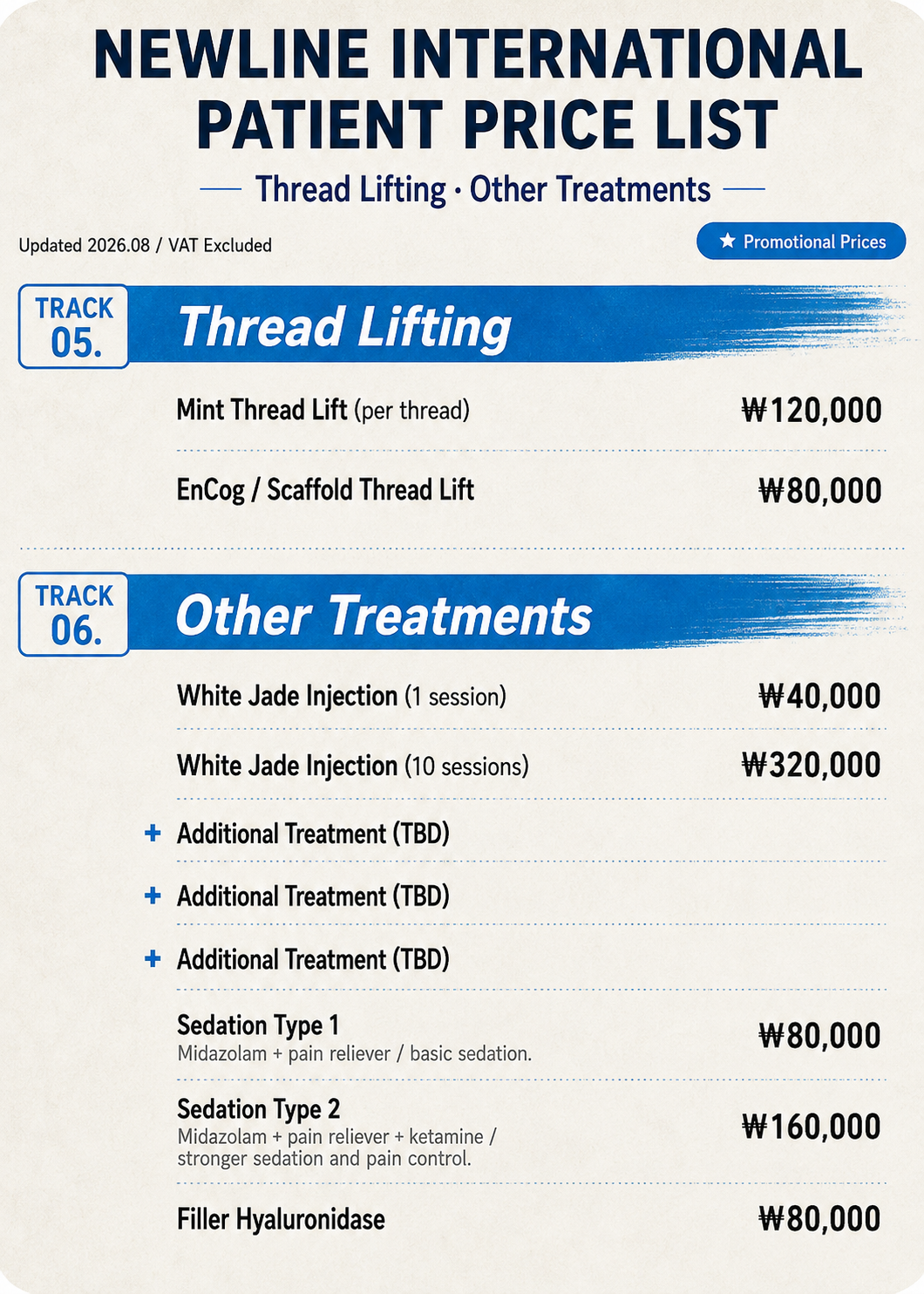
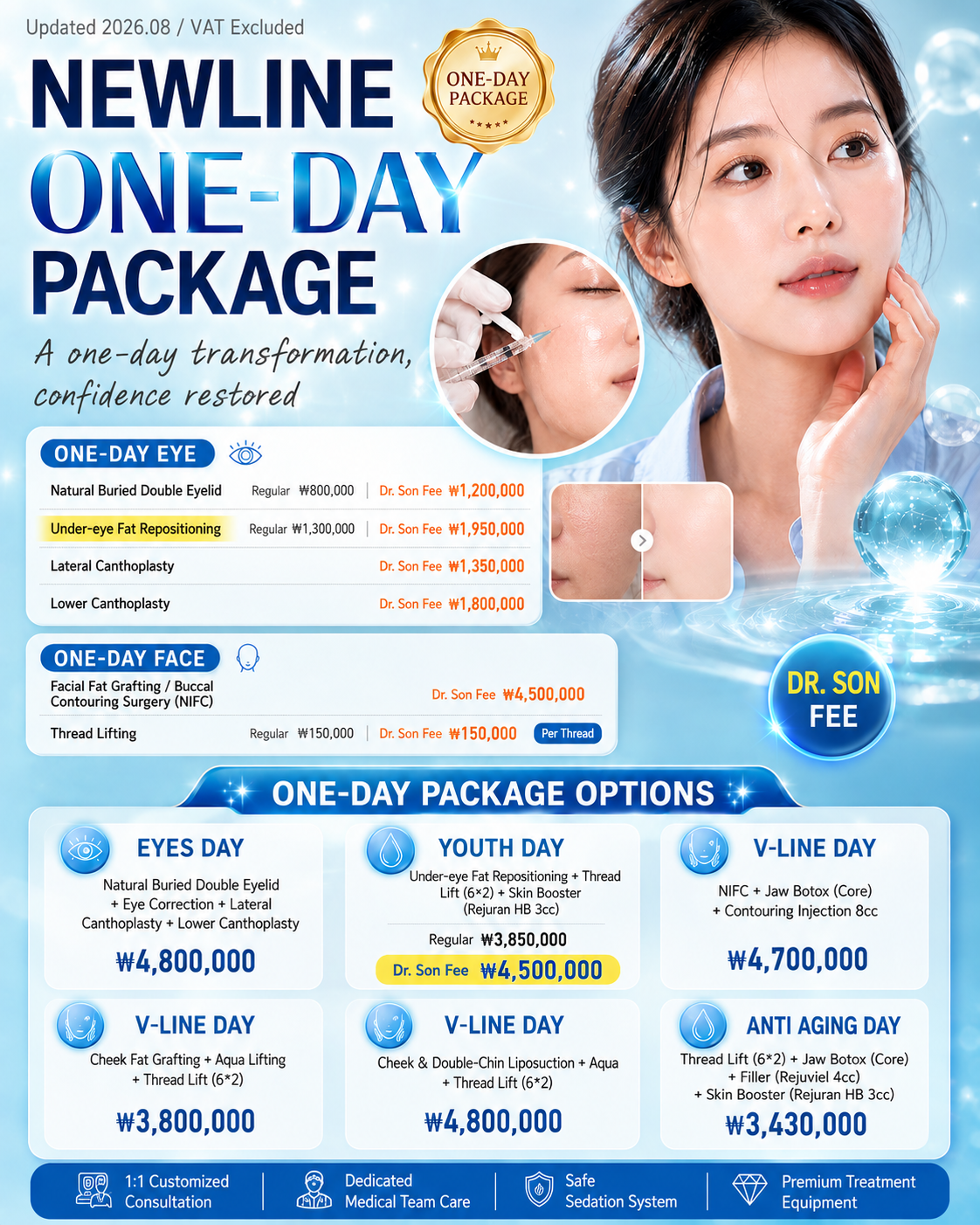
Use the August 2026 price list as a reference, then confirm the exact amount, area and final price before payment.
Current listed price ₩160,000. Newline lists this as a distinct Rejuran option. Ask whether it matches your treatment area and concern.
Current listed price ₩200,000. Confirm the exact planned area and why this version is being considered.
Current listed price ₩480,000. The larger listed amount means price comparisons should account for quantity as well as product name.
Current listed price ₩320,000. Useful for comparing a smaller Booster amount against other Newline skin-booster choices.
Current listed price ₩560,000 for one vial. Confirm how much of the vial is planned for your treatment area.
Current listed price ₩480,000. Newline lists this separately from Juvelook Booster, so the two should not be treated as the same service.
Current listed price ₩640,000. Confirm whether full-vial treatment is actually relevant to your treatment plan.
Small raised areas or visible injection points can occur after injectable skin-booster treatment. Do not assume a fixed 24-hour resolution time.
Degree and duration vary by area, product amount and individual response. Build a recovery margin before close-up photos or events.
These can occur even when the overall treatment is considered relatively low downtime. Ask what is expected for the exact injection plan.
Share your flight or train time before treatment. No universal “same-day flight OK” guarantee is used on this page.
Skin boosters do not need to be planned in isolation.
Newline's current menu includes Potenza pumping combinations with Skin Botox, Juvelook and Rejuran 1cc. That does not mean a combination is automatically better. It means patients considering pores, texture, acne-related concerns or broader skin-quality goals can ask whether a device-plus-booster plan is appropriate. The sequence, same-day suitability and recovery should be confirmed individually.
Newline confirms N Tip and pumping combinations. Ask whether microneedling/RF is relevant to pores, texture or acne-related concerns.
Another confirmed microneedling-related treatment. Appropriate choice depends on skin condition and treatment goal.
Confirmed laser option. Recovery profile differs from injectable skin boosters and should be planned separately.
Confirmed laser category for pigmentation-related planning. Do not assume it substitutes for a skin booster.
Another confirmed injectable skin-quality option on Newline's price list.
Confirmed device-assisted injection category. Ask how it differs from hand injection for your planned treatment.
The previous page prescribed fixed session numbers and switching rules. Newline's current page leaves session count and interval to individual planning.
Results and maintenance timing are not guaranteed by a single calendar rule.
Current Newline information is shown in KRW. Foreign-exchange and yearly-budget projections were removed.
The page no longer says all new foreign patients should start with Rejuran.
Age and sex alone do not determine which booster is appropriate.
Country-level FDA/KFDA and Korea-versus-US claims were removed from the patient decision framework.

A useful consultation should explain why a product, amount and treatment area fit your concern — not simply give you a longer menu.
Contact Newline with your main concern, prior procedures, preferred date and travel schedule. Ask which currently confirmed option fits your situation and what the final VAT-inclusive price will be.
Individual suitability, product choice, amount, recovery and results vary. Prices are based on Newline's August 2026 international-patient list and should be reconfirmed, including VAT, before treatment. This page does not prescribe a fixed series or guarantee a specific result duration.
📞 +82-10-6757-4281
* Near Seomyeon Station Exit 7, opposite the rear entrance of Lotte Department Store Busan Main Store