Why expats search differently from short-term tourists
Long-term residents may care about continuity, follow-up and repeat treatment more than a traveler who has only one day in Busan. They may also want to compare treatment plans over several months rather than choosing a one-time package.
That makes clear pricing, treatment naming and internal follow-up especially important. A resident can return for review, adjust a treatment plan and compare results over time.
Skin concerns commonly searched by foreign residents
Common search intents include acne, acne scars, pores, pigmentation, skin texture, sagging, wrinkles and double-chin concerns. Newline's site separates these concern pages from device pages so patients can start from the problem rather than from a machine name.
For example, large pores may lead to MTS, Potenza or Fraxel comparisons, while sagging may lead to Ultherapy Prime, Thermage FLX, XERF, Shurink, ONDA or thread lifting.
Transparent price comparison
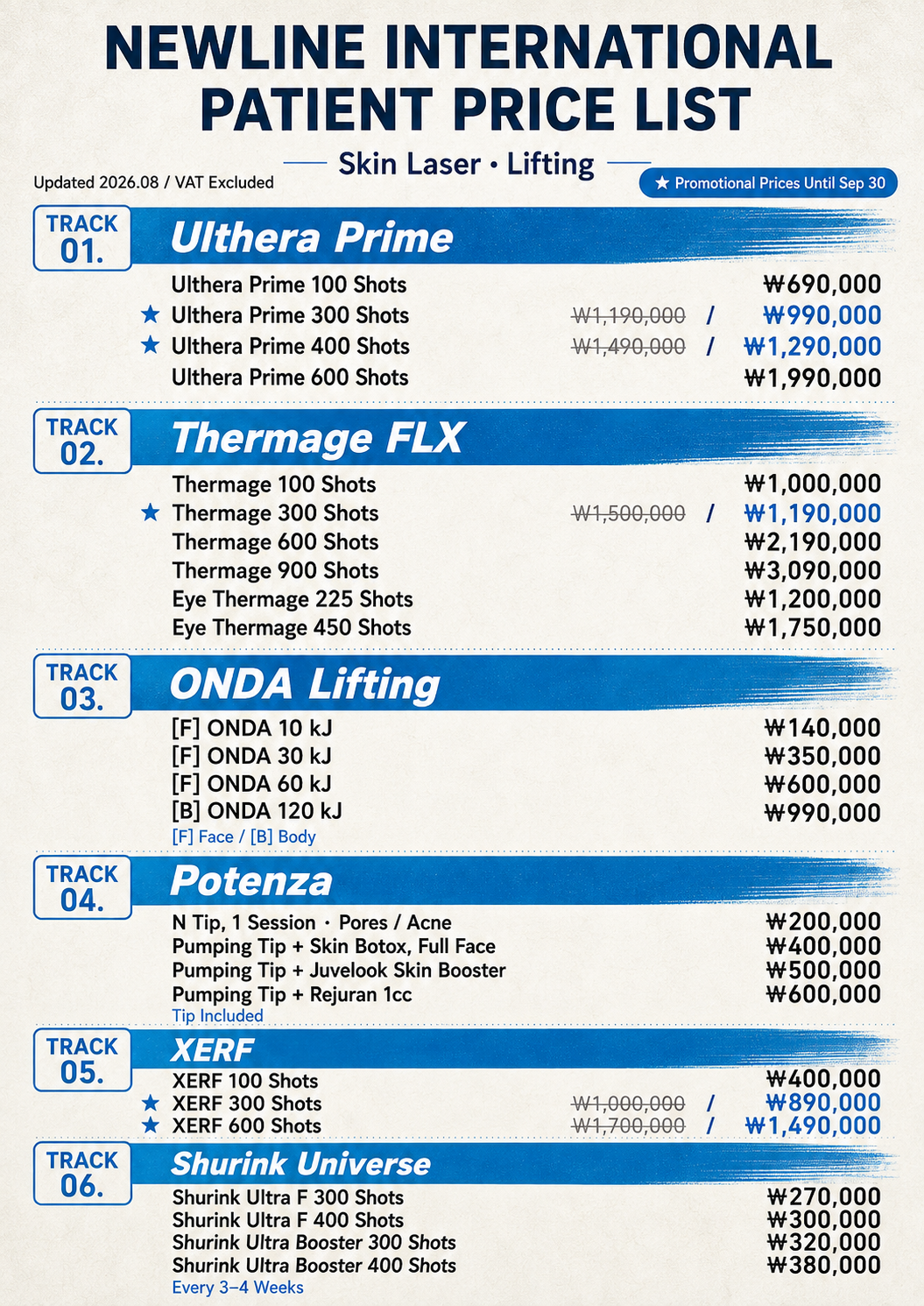
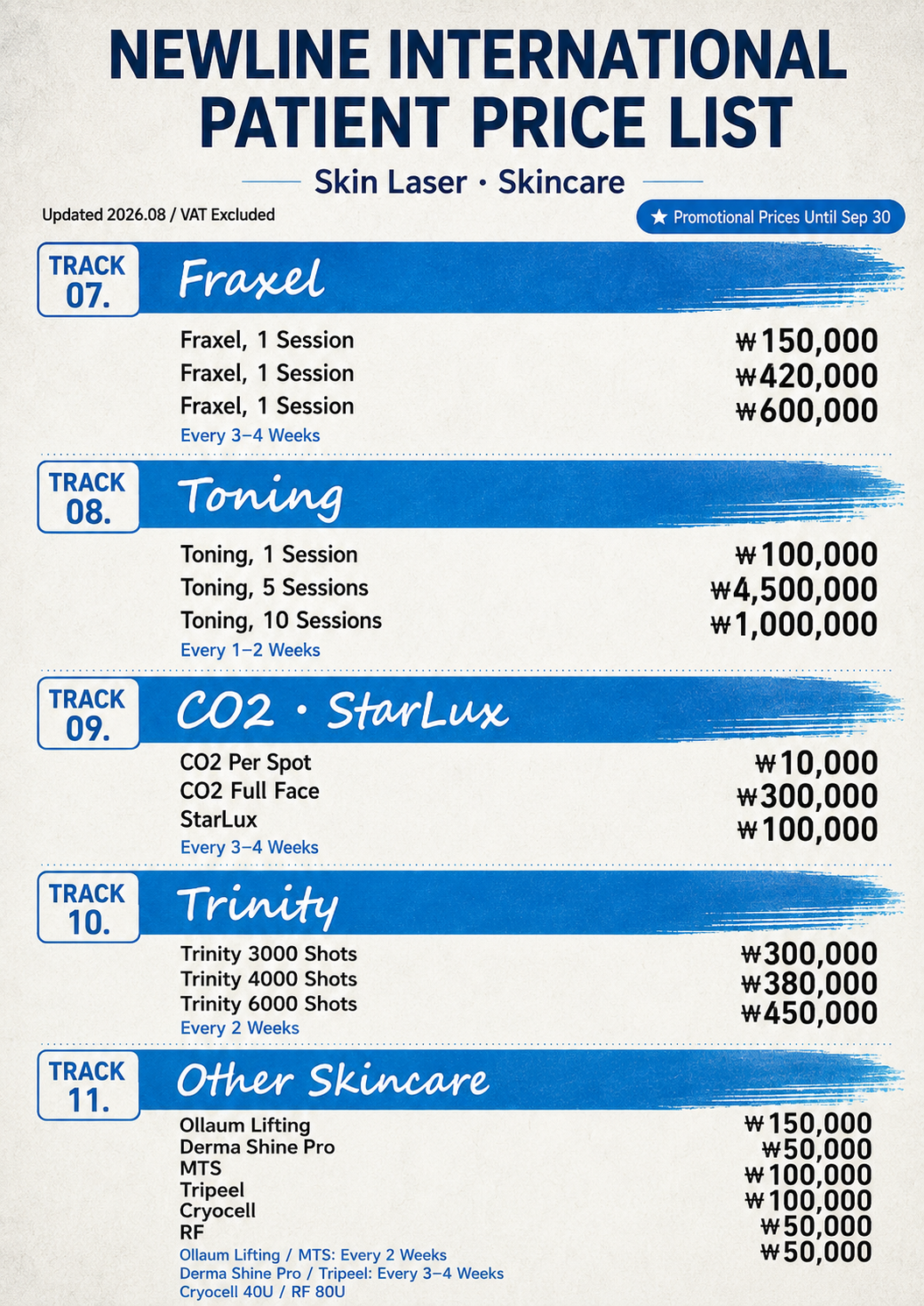
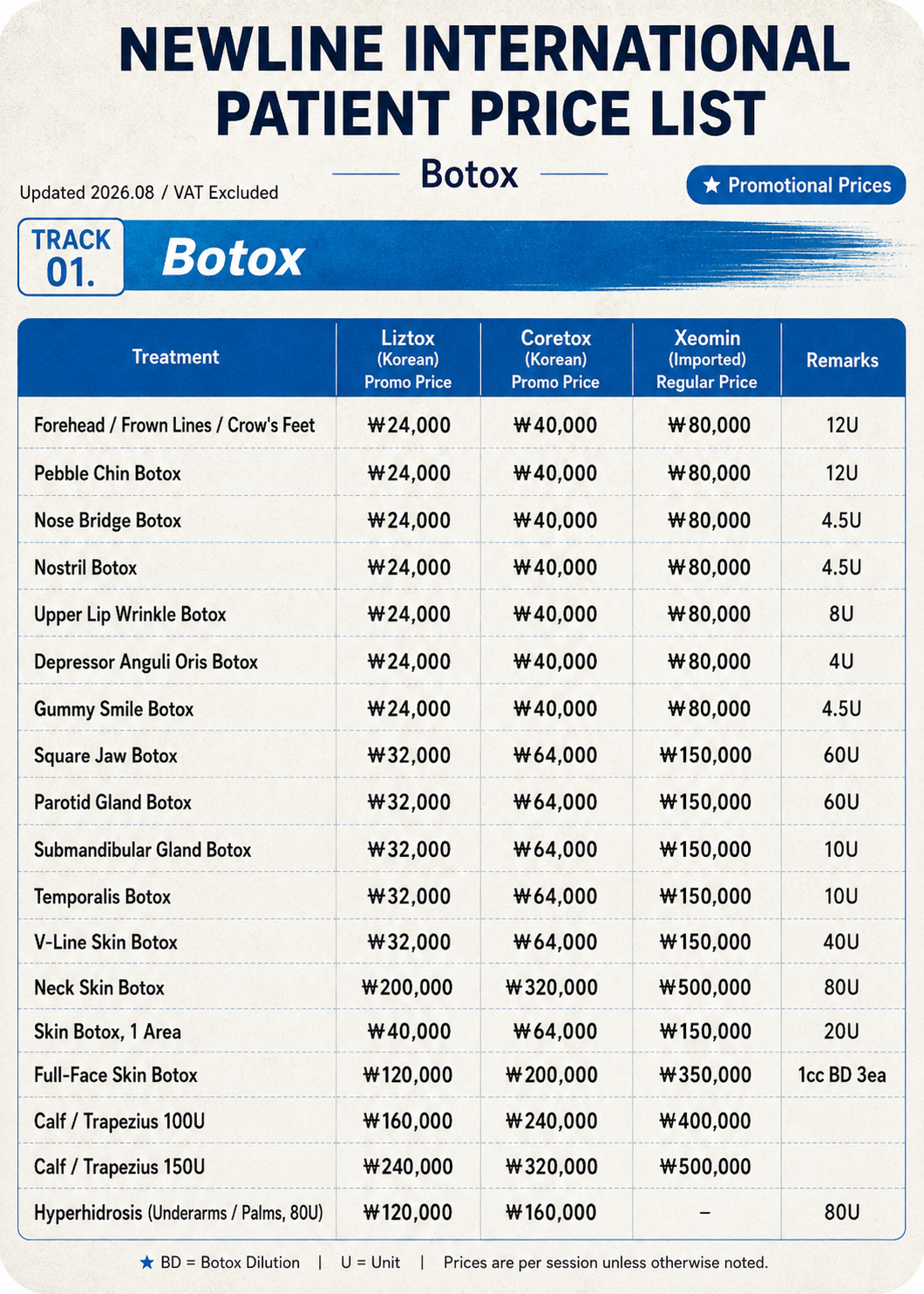
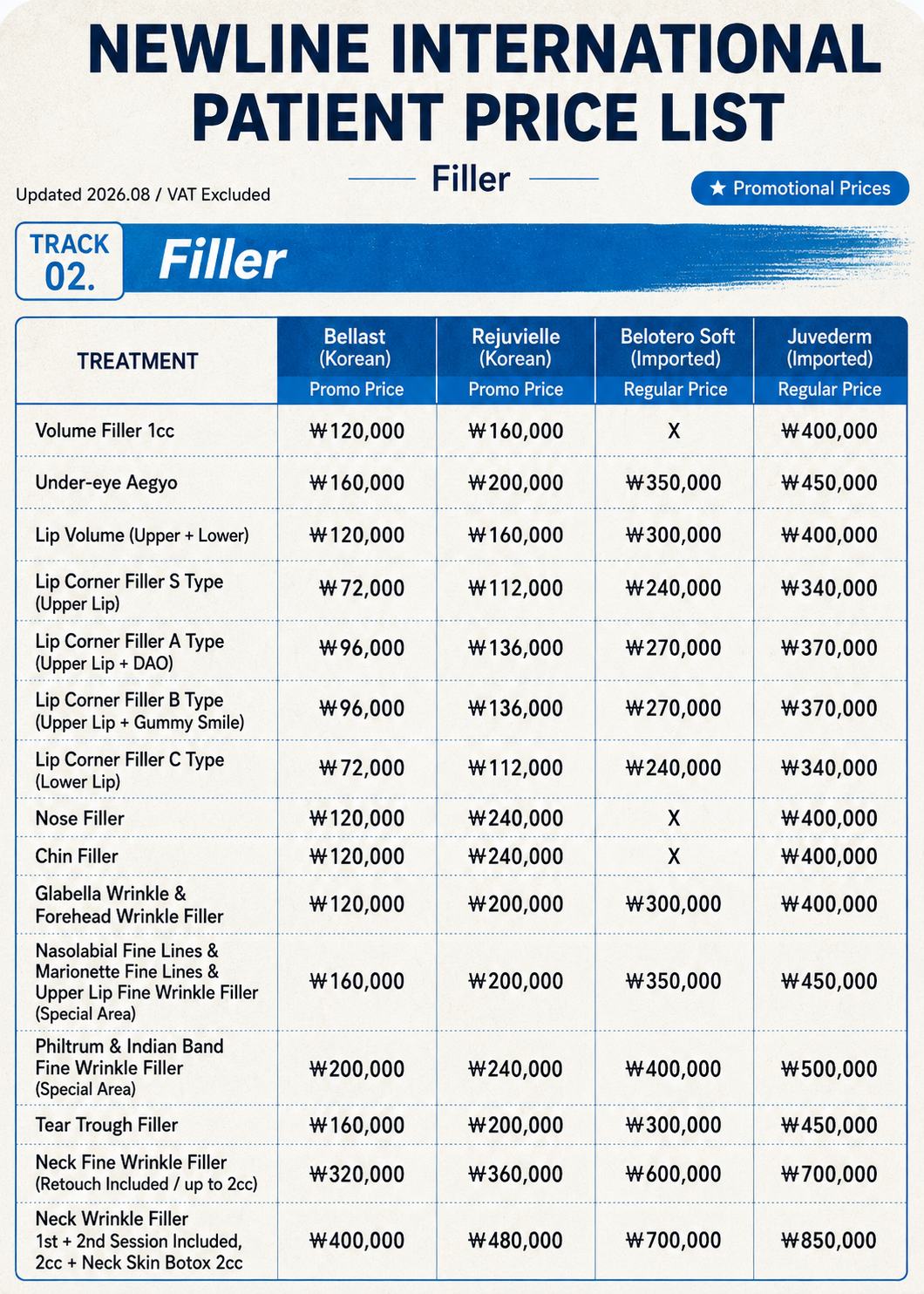
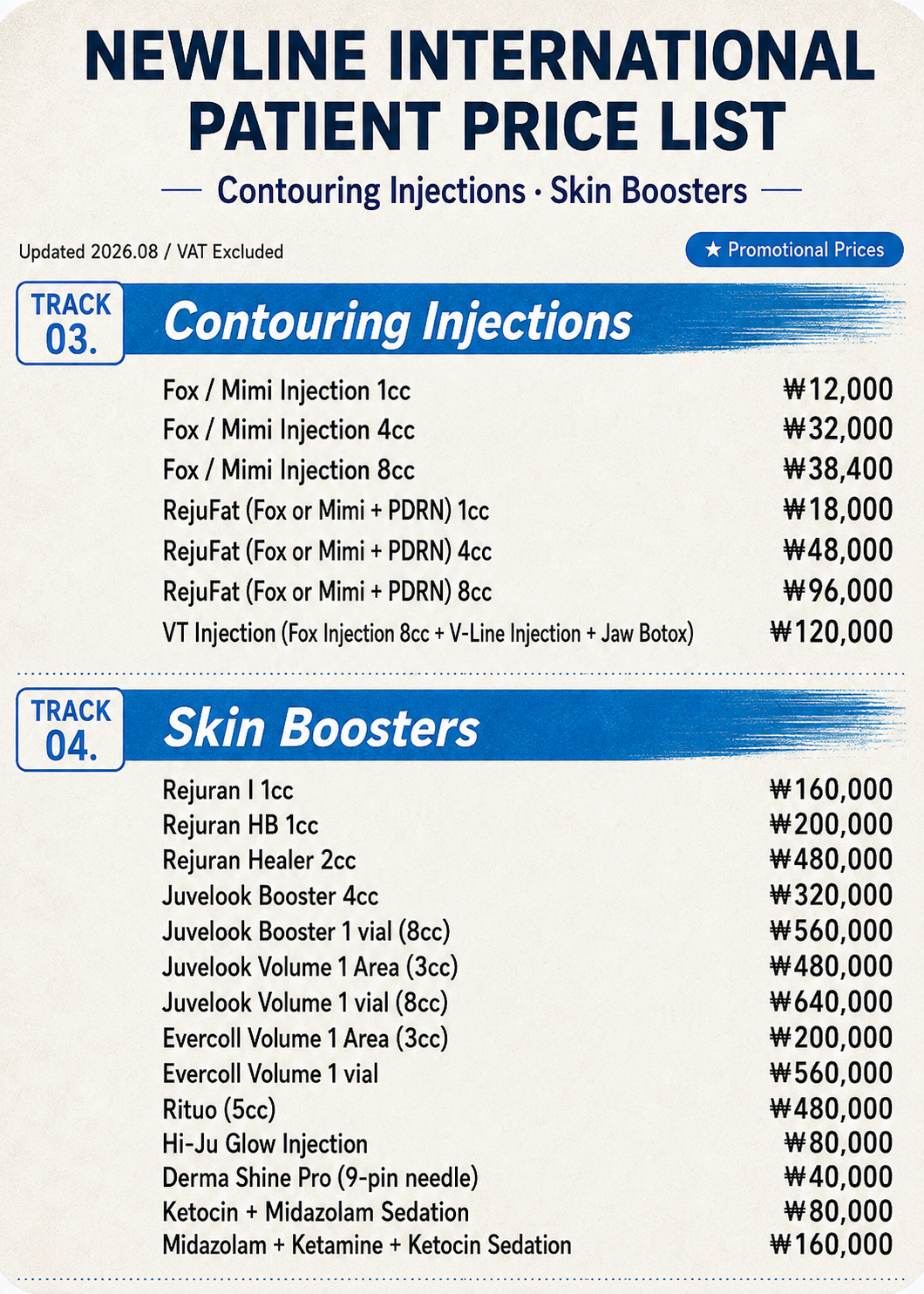
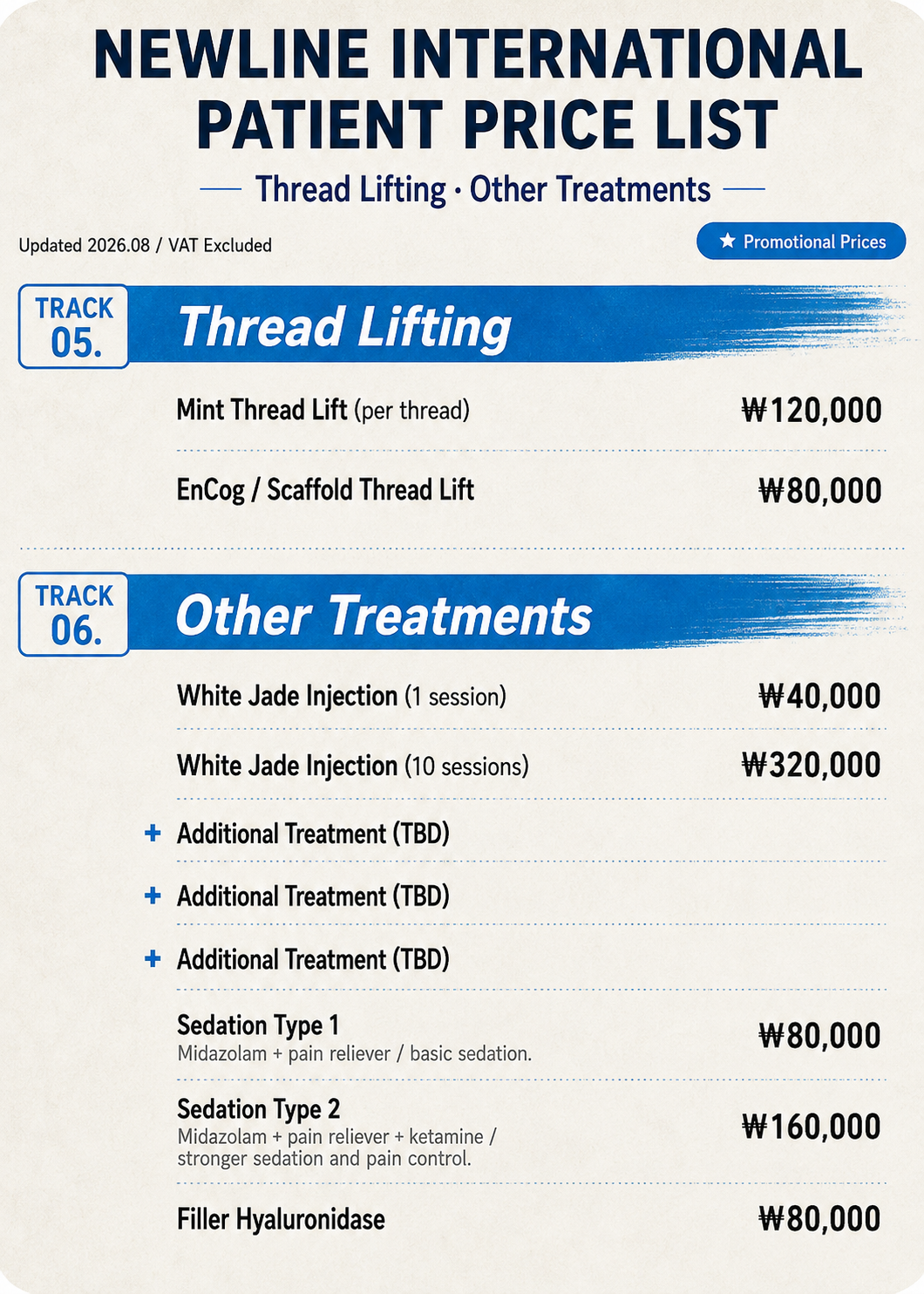
Newline's supplied August 2026 international-patient list includes published prices across lifting, Botox, fillers, lasers and skin boosters. VAT is excluded in the source list, so the final payable amount should be confirmed before treatment.
Residents should compare dose, shot count, product volume and brand rather than only the lowest headline price. A filler priced per cc is not directly comparable with a package priced by treatment area.
Communication and medical credentials
Chief Director Son Hee-dong, MD, PhD is a board-certified plastic surgeon. The site intentionally does not describe Newline's physicians as board-certified dermatologists. This credential distinction should remain clear.
Consultation support is listed in Korean, English, Japanese and Chinese, but patients should still communicate the treatment goal, previous procedures and any relevant medical history as clearly as possible.
Building a longer-term treatment plan
Long-term residents can benefit from spacing treatments so results can be evaluated rather than stacking many procedures at once. A series may make sense for selected skin concerns, but there is no universal schedule that fits every patient.
Keeping standardized photographs and a record of treatment dates, brands, doses and settings can make follow-up more useful.