01
Choose your main concern
Start with the problem you want to improve: sagging, pores, acne scars, pigmentation, wrinkles, double chin, V-line, sweating or facial volume.
Newline Clinic welcomes international patients in Seomyeon, Busan. This guide explains the clinic's current location, multilingual consultation support, confirmed treatments, 2026.08 pricing and booking information for Japanese visitors.
Plan by treatment goal, recovery window and verified clinic information.
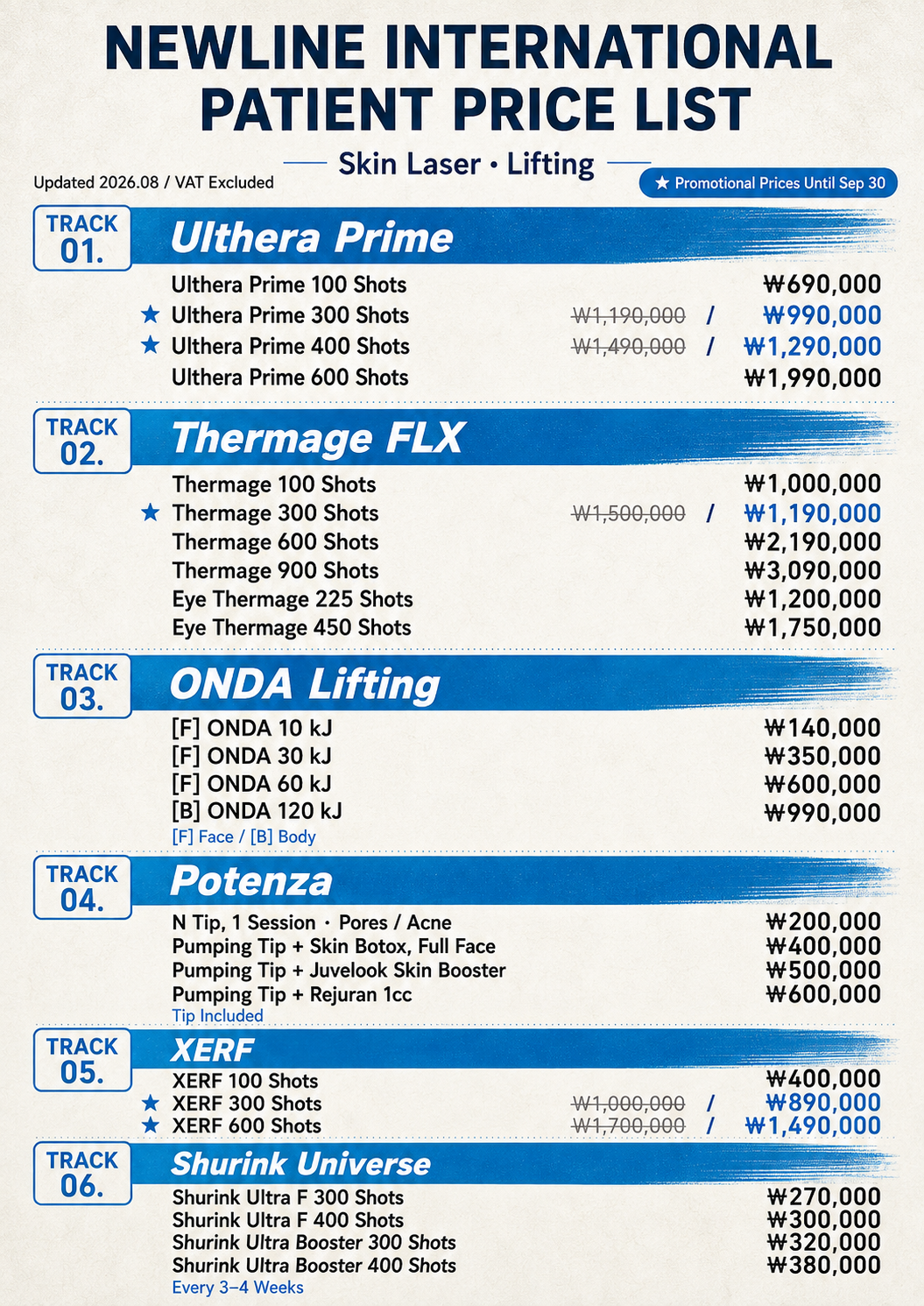
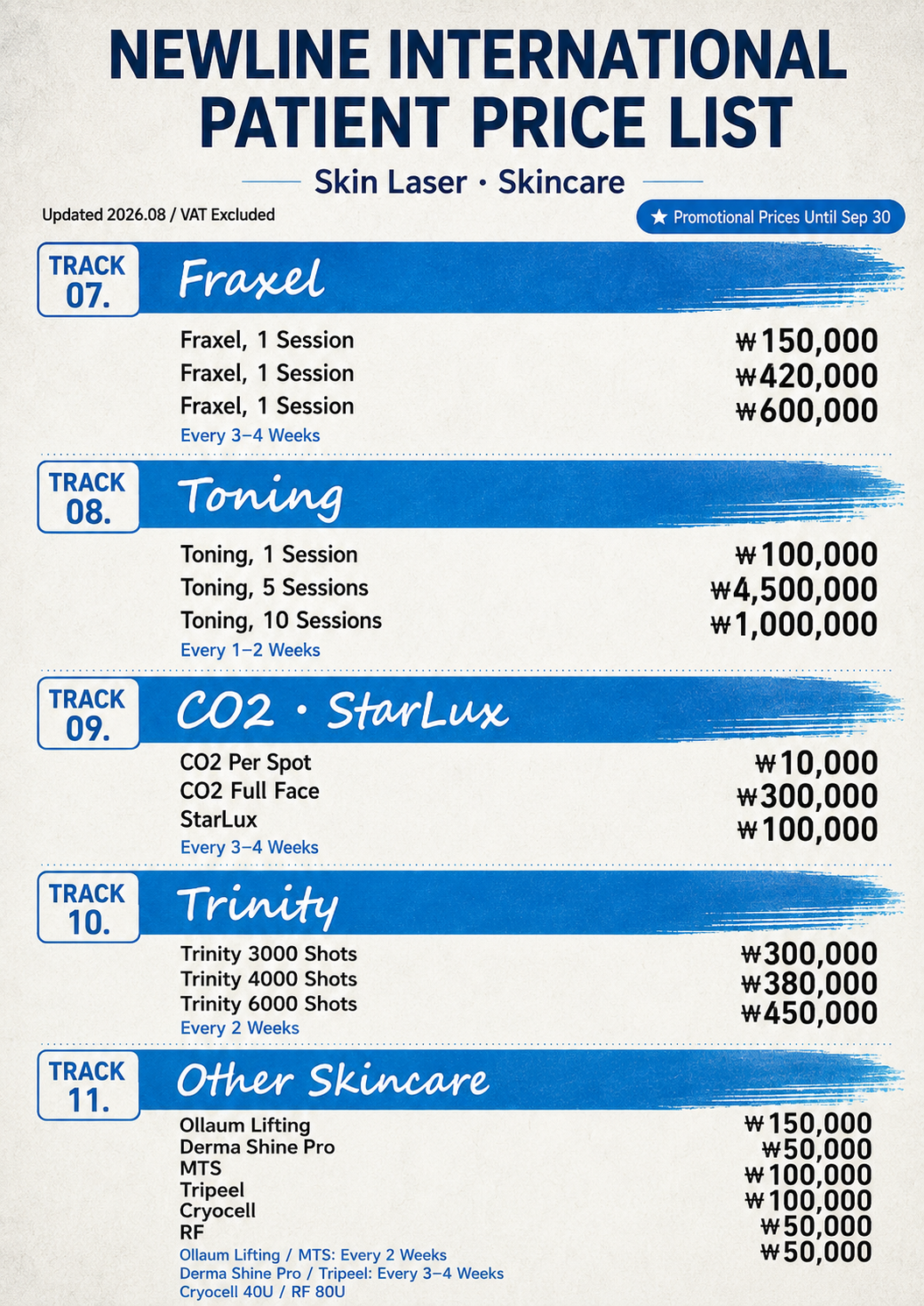
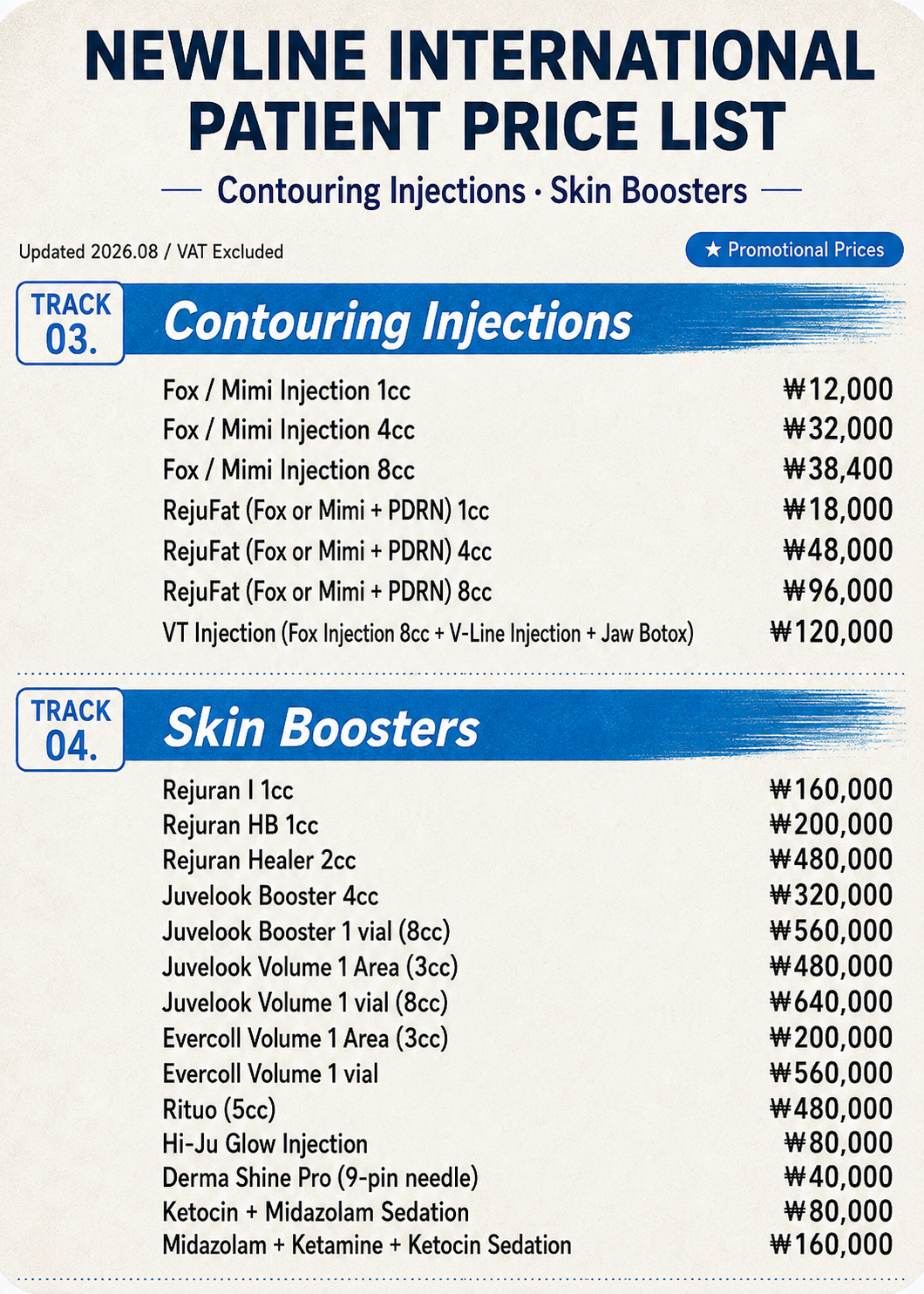
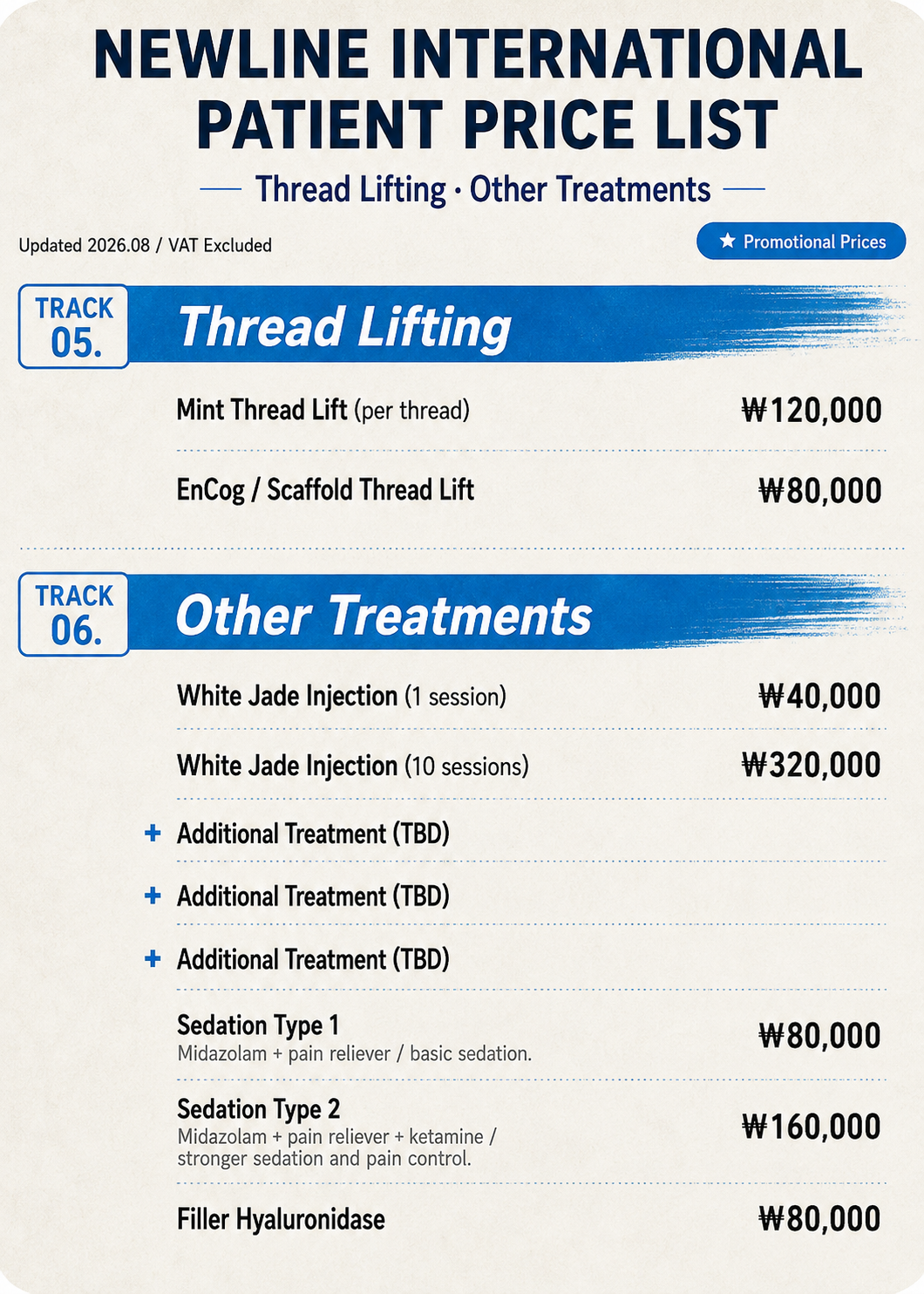
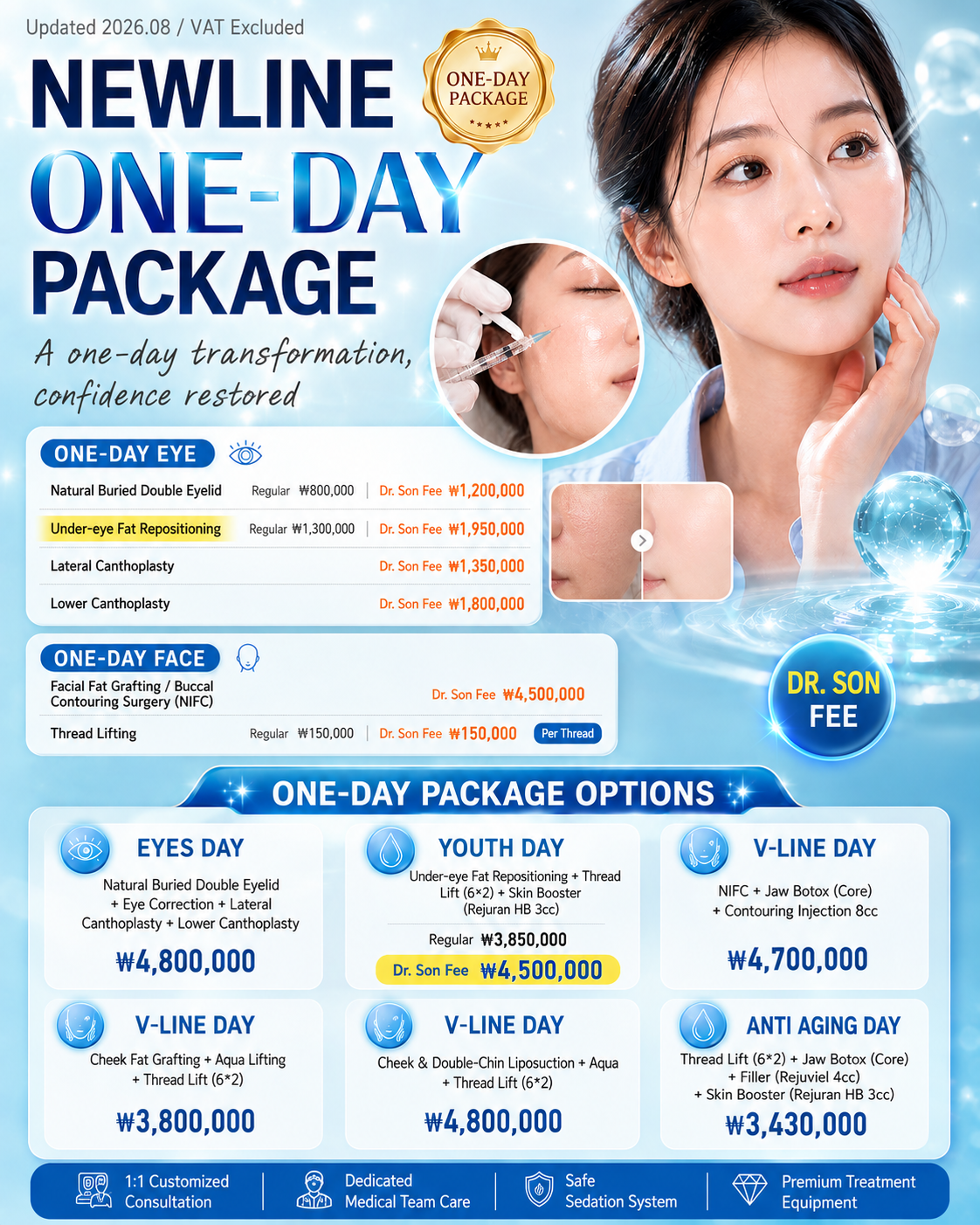
Newline Clinic is a physician-led aesthetic and plastic surgery clinic in Seomyeon, Busan. Current confirmed categories include lifting, Botox, fillers, skin boosters, lasers, RF microneedling, MTS, contouring injections and thread lifting. The supplied international-patient price list was updated in August 2026 and states that VAT is excluded. Japanese patients should confirm the exact procedure, product or device, dose or shot count, final price and expected recovery before booking.
Start with the problem you want to improve: sagging, pores, acne scars, pigmentation, wrinkles, double chin, V-line, sweating or facial volume.
Tell Newline when you arrive, when you leave Korea and whether you have an important event. Recovery differs by procedure.
Ask the clinic to confirm the exact device, injectable product, dose, shot count or treatment area currently available.
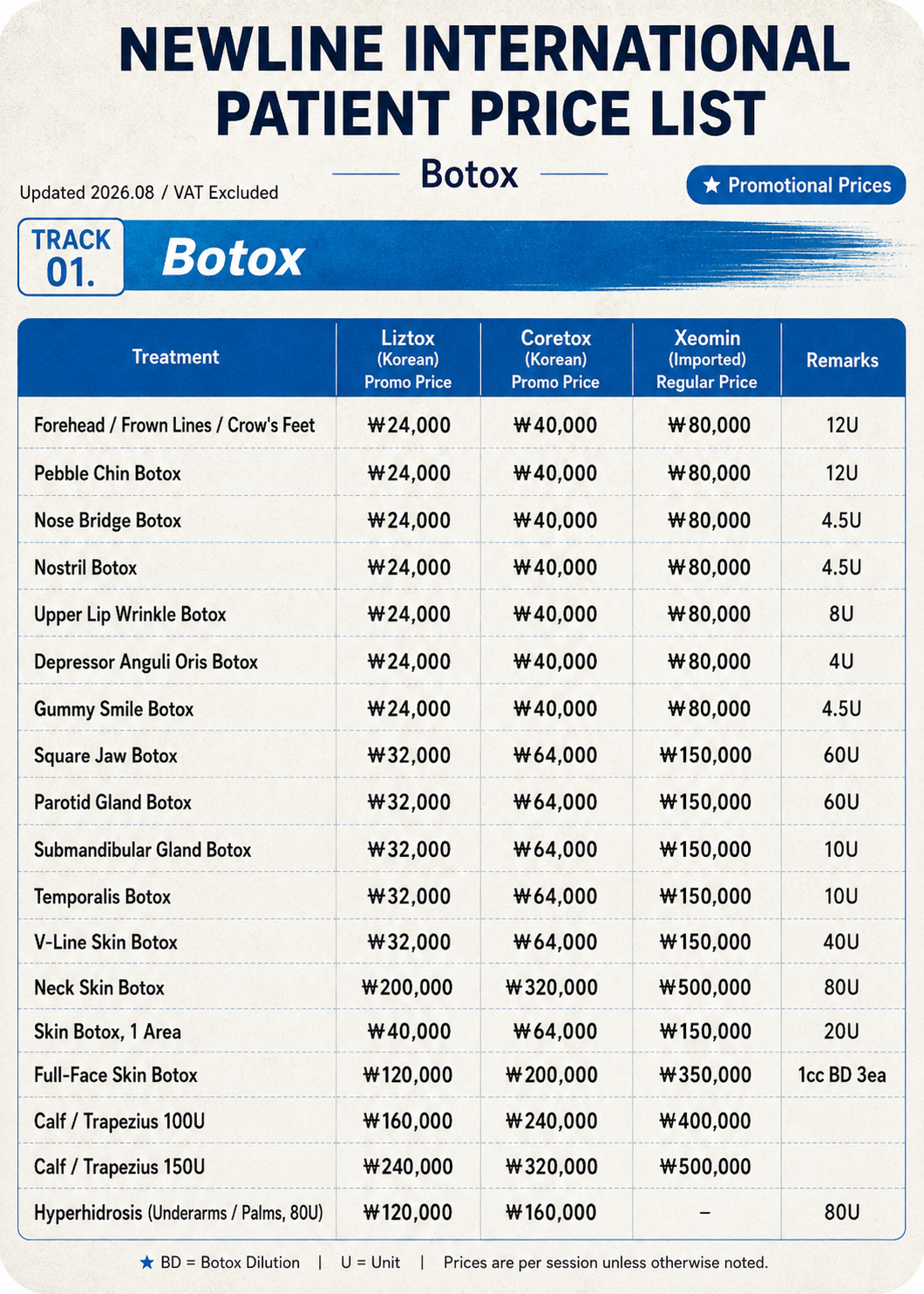
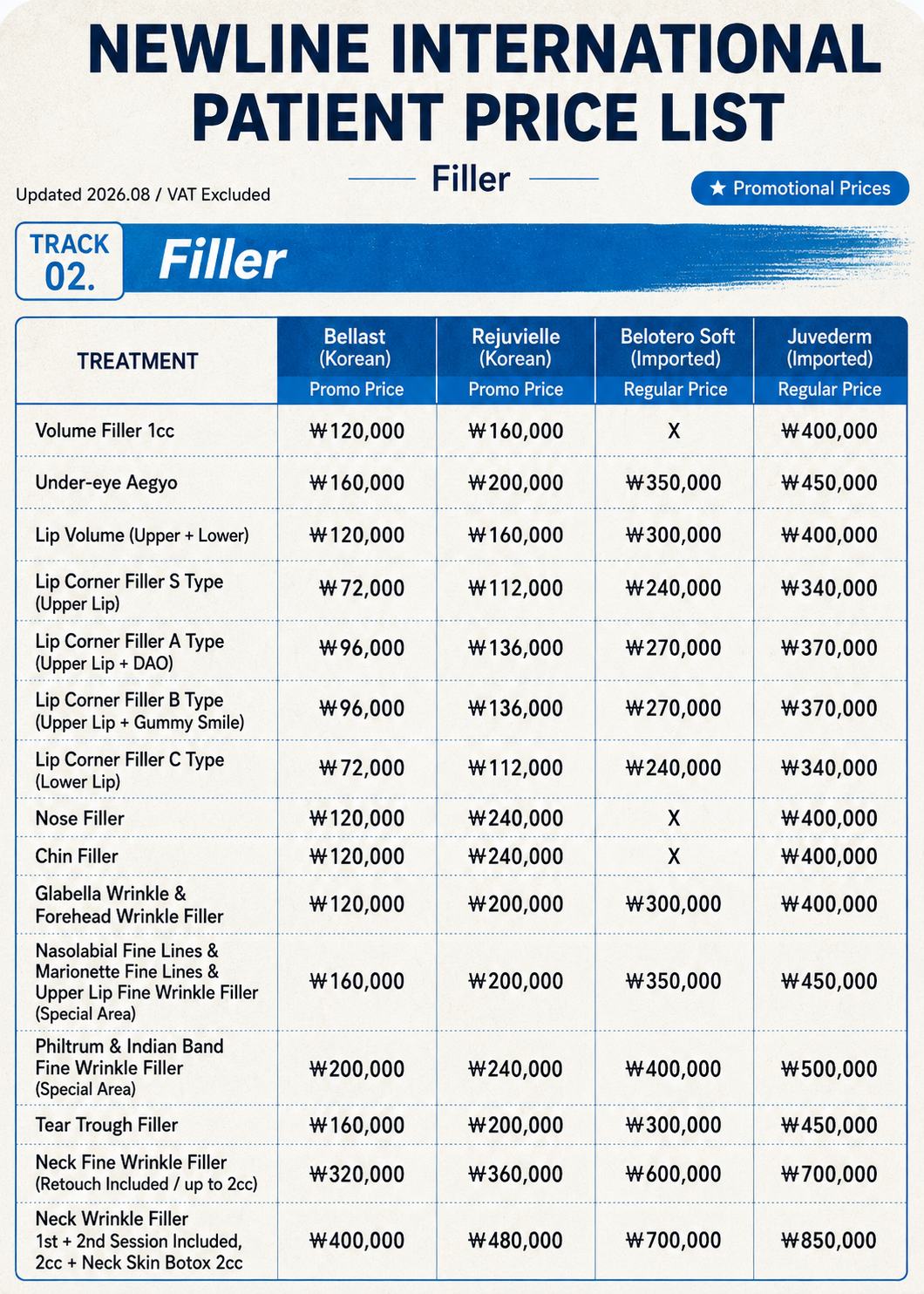
The August 2026 international-patient price list states VAT is excluded. Confirm the final VAT-inclusive amount before payment.
Treatment should be selected after assessment of anatomy, skin condition, previous treatment history and your priorities.
Ask about cleansing, makeup, exercise, sauna, sun exposure and flight timing for the exact treatment you receive.
Physician-planned lifting options for selected laxity and facial contour concerns.
Skin-booster categories with different products and volumes. Product choice should be confirmed before treatment.
Current menu includes facial Botox, jaw Botox, Skin Botox, neck Skin Botox, calf/trapezius Botox and hyperhidrosis treatment.
Current filler menu includes lip, chin, nose, under-eye, tear trough, wrinkle and neck filler options.
Laser and resurfacing categories for selected pigmentation, texture, pore and scar-related concerns.
RF microneedling, microneedling and thread-based options for selected texture, skin-quality and lifting concerns.
Current clinic information lists cash, bank transfer, Visa and Mastercard. Confirm current accepted methods before your appointment.
Newline lists consultation support in Korean, English, Japanese and Chinese. Confirm Japanese-language availability for your appointment.
The supplied international-patient price list is updated 2026.08 and states VAT is excluded.
40 Bujeon-ro 66beon-gil, Floors 2–5, Busanjin-gu, Busan 47287.
 Newline Doctor Portrait
Treatment planning should start with anatomy, skin condition and the patient's priorities — not with a device name alone.
Send your preferred date, main concern and previous treatment history. Ask the clinic to confirm current availability, Japanese-language support and final pricing before travel.
Individual suitability and results vary. This page is for general information and does not replace medical consultation. Current treatment availability, final VAT-inclusive price and recovery guidance should be confirmed directly with Newline Clinic.
📞 +82-10-6757-4281
* Near Seomyeon Station Exit 7, opposite the rear entrance of Lotte Department Store Busan Main Store