01
Device-specific verification
International patients should confirm the exact device name rather than relying on generic terms such as HIFU or RF.
Trend language changes quickly. Newline's useful 2026 perspective is simpler: focus on currently confirmed treatment options, match them to the patient's actual concern, and avoid choosing a procedure only because it is new or popular online.
The most useful 2026 trend is better treatment matching — not chasing the newest device.
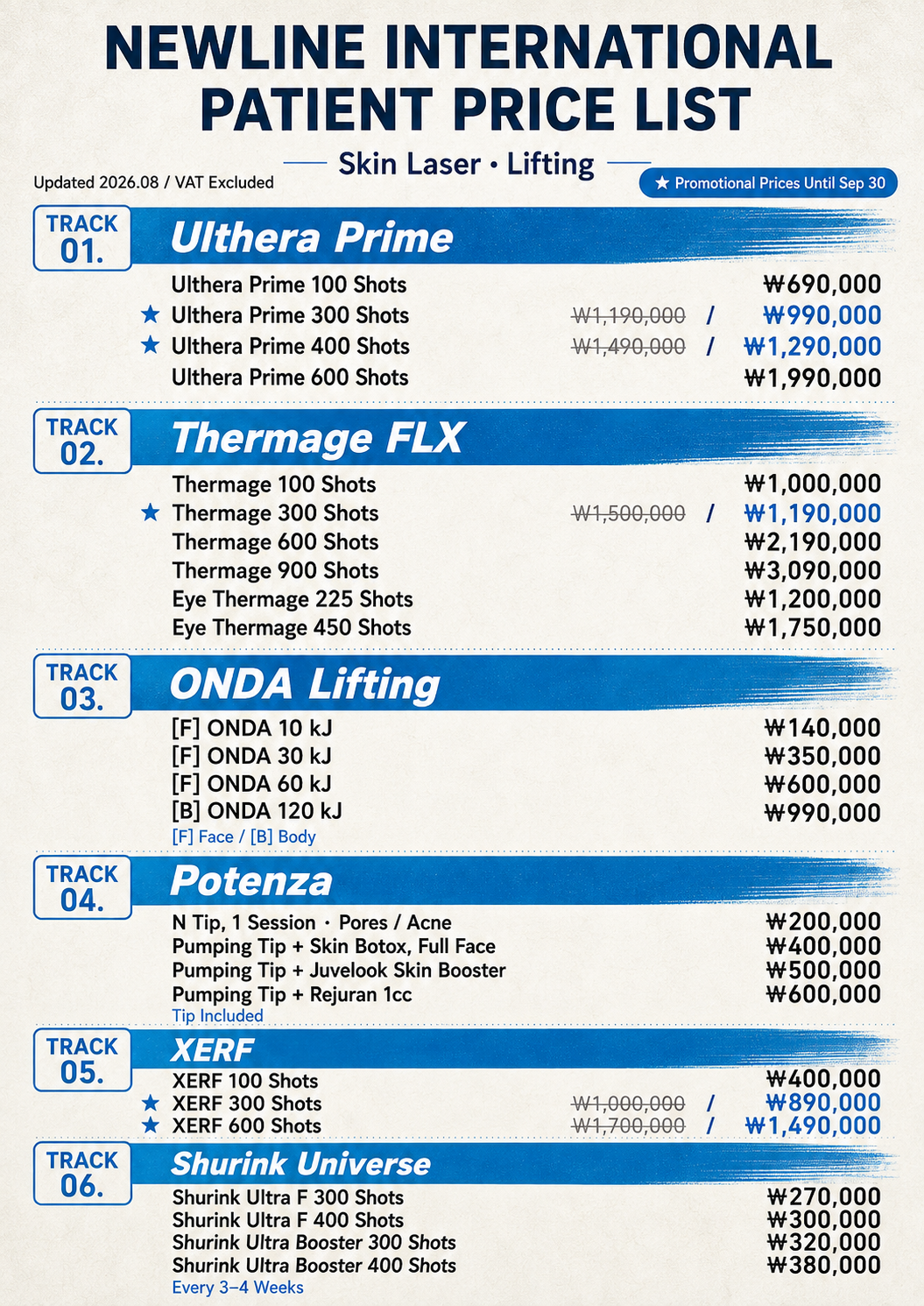
Newline Clinic's confirmed 2026 menu includes Ultherapy Prime, Thermage FLX, XERF, Shurink Universe and ONDA for lifting; Rejuran, Juvelook, Rituo and Hi-Ju Glow Injection for skin-quality concerns; Botox and dermal fillers for selected muscle, contour and wrinkle concerns; and Fraxel, Laser Toning, CO2, Trinity, Potenza and MTS for selected texture, pore, scar and pigmentation concerns. The treatment plan should be built around the concern, not around a trend label.
International patients should confirm the exact device name rather than relying on generic terms such as HIFU or RF.
Skin booster is a broad category. Product, volume, area and purpose should be discussed separately.
Patients should start with laxity, wrinkles, volume, pores, scars, pigmentation or skin quality instead of selecting a treatment from social media alone.
More treatments do not automatically mean a better plan. Combining procedures should depend on whether each component addresses a distinct concern.
Travel, work and important events should be considered before choosing treatments with redness, swelling, bruising or surface recovery.
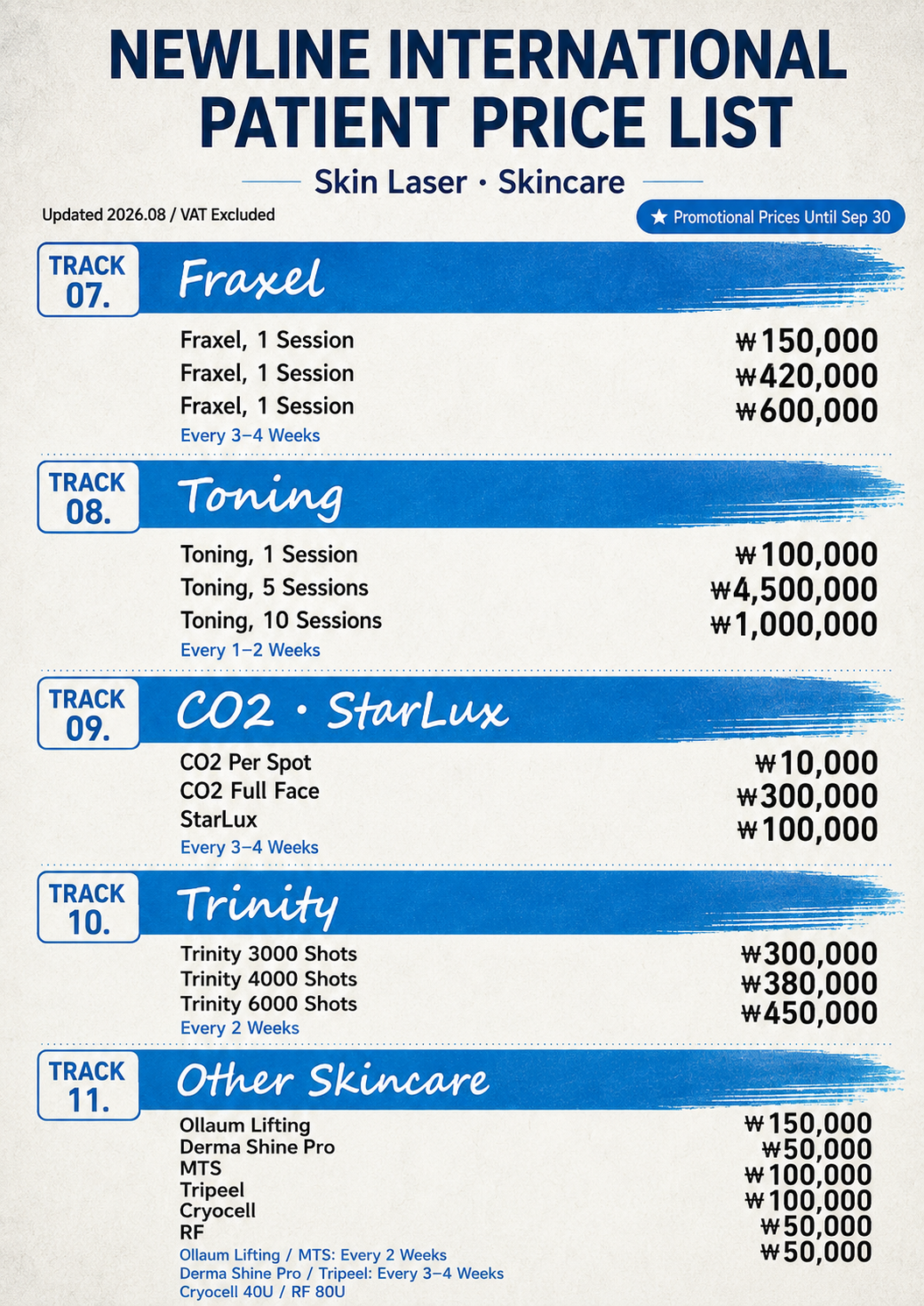
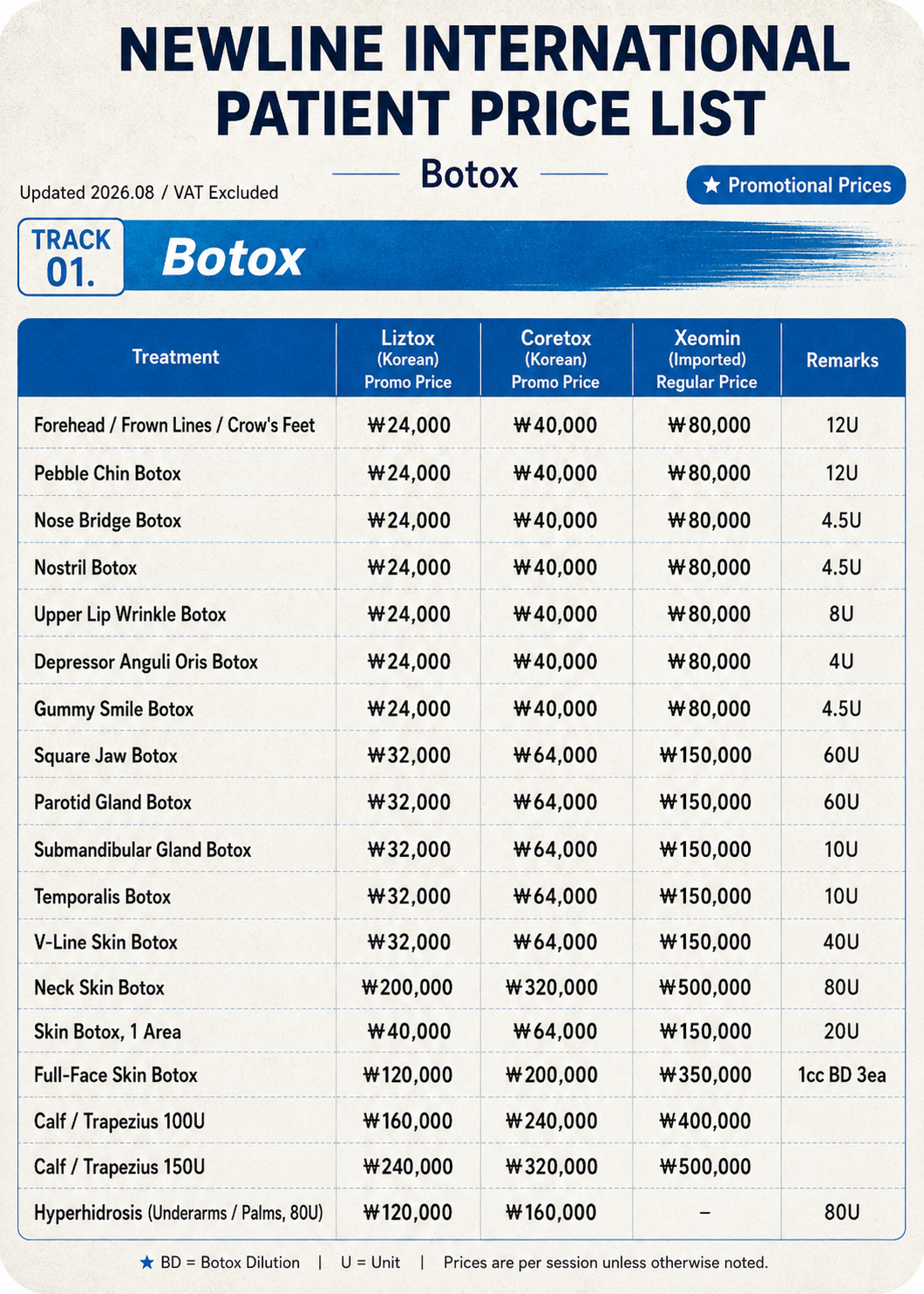
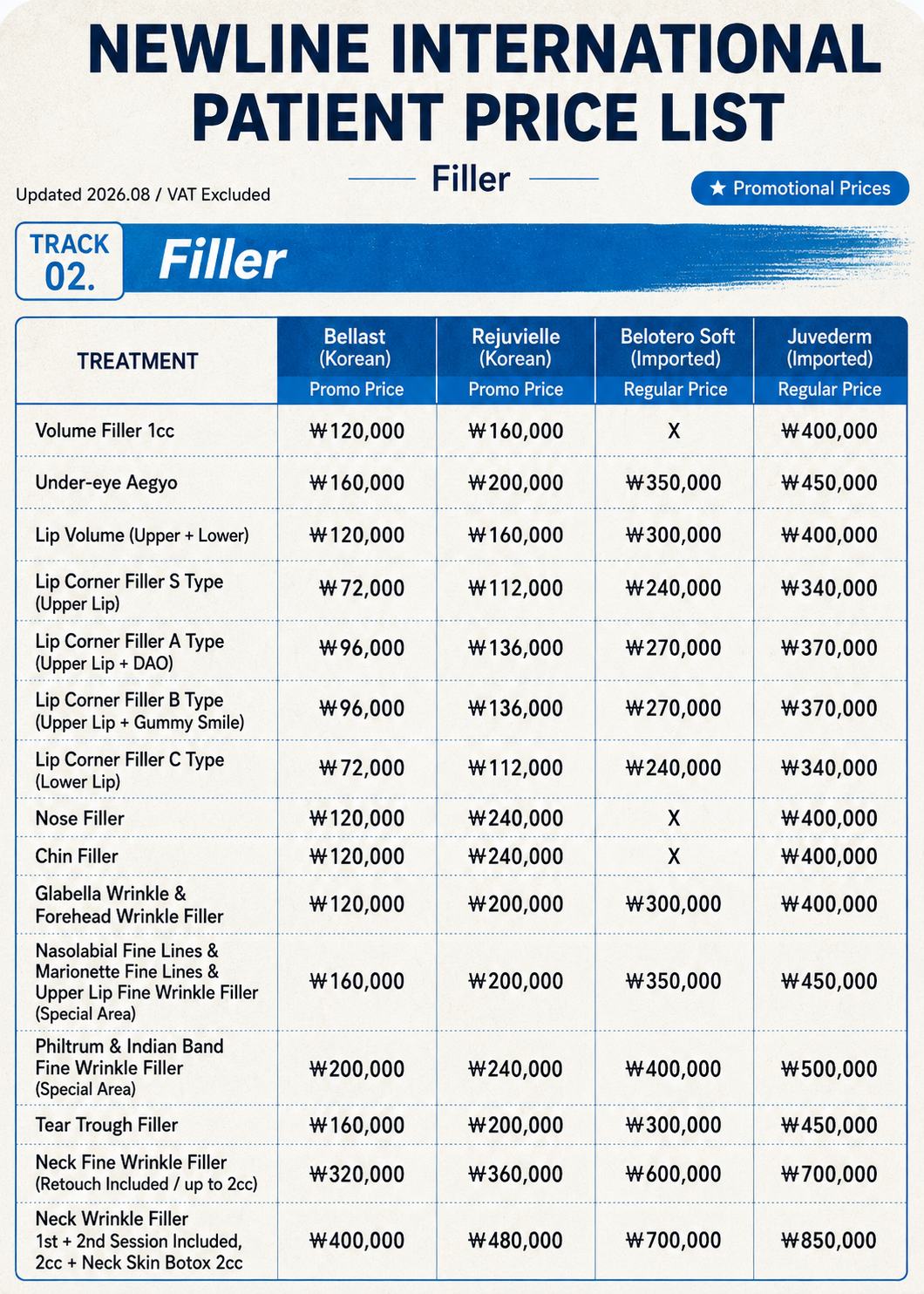
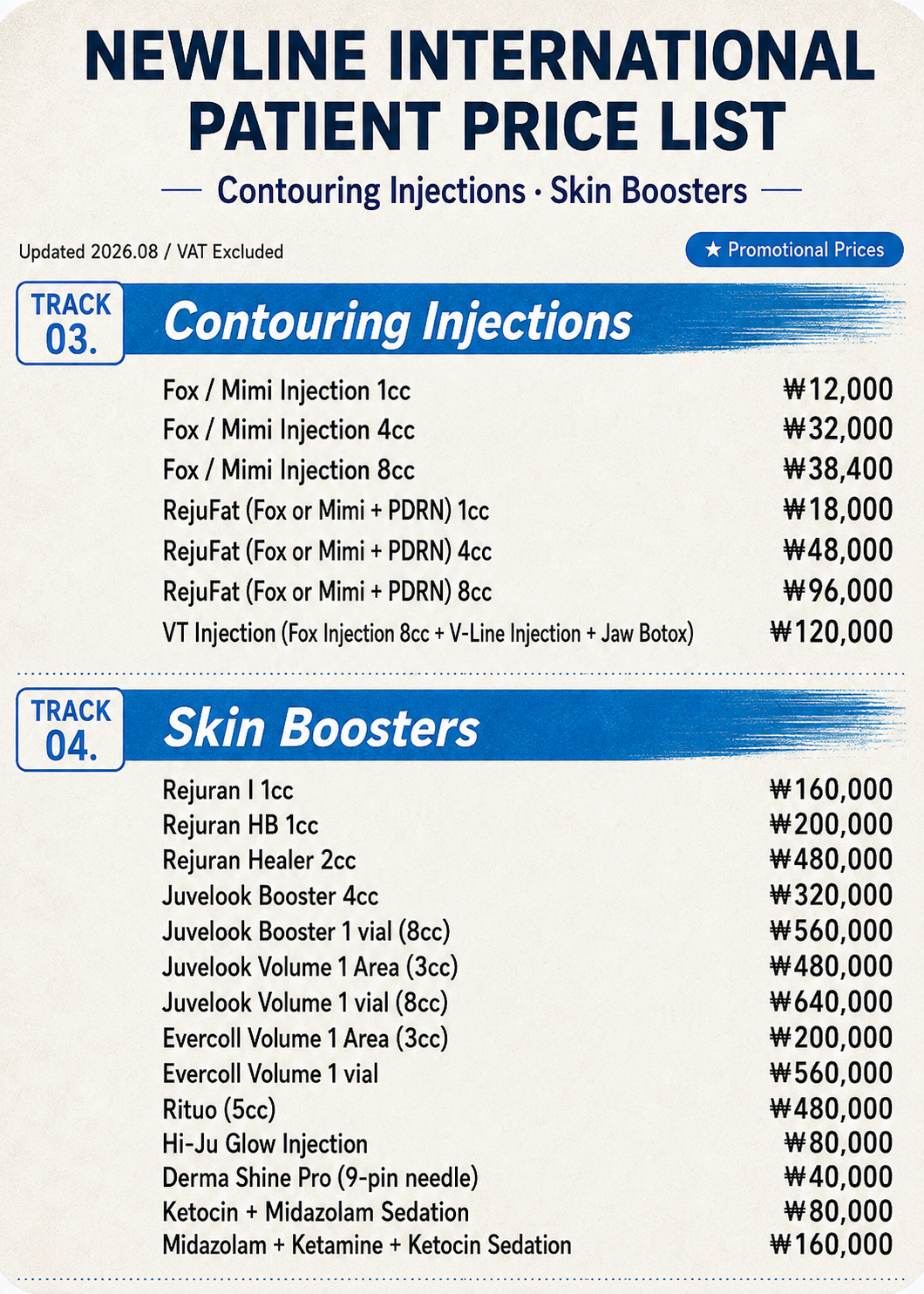
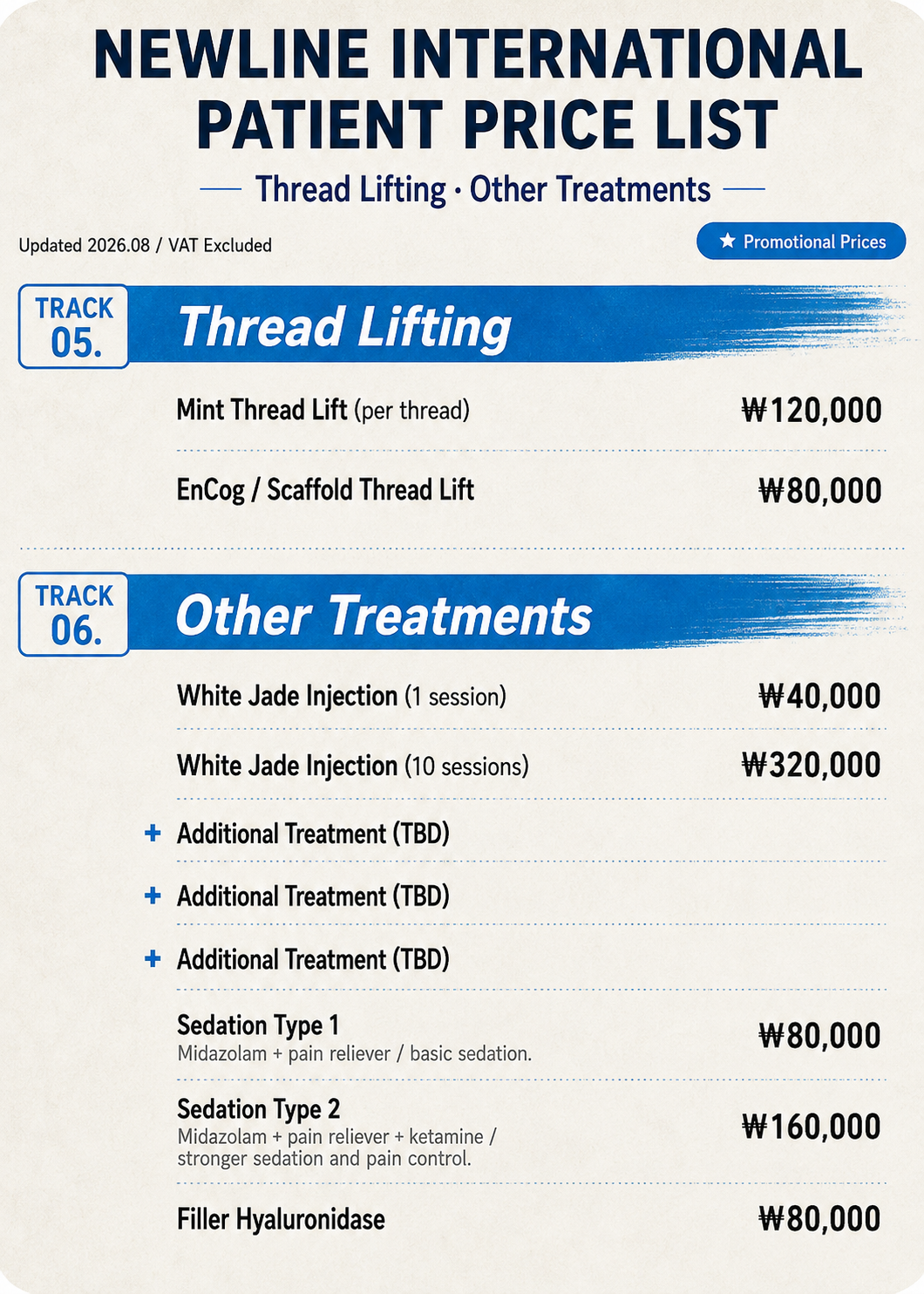
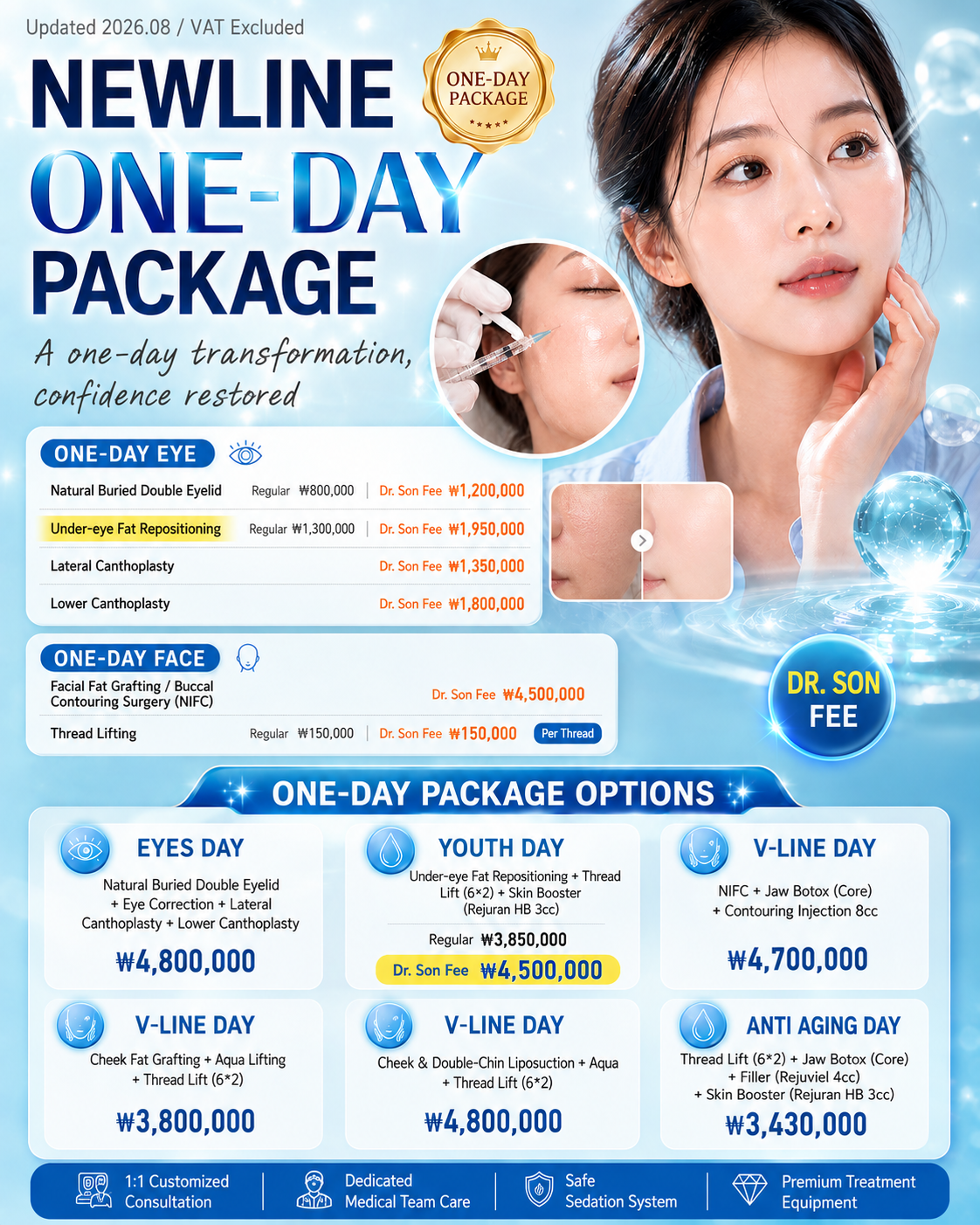
Use the August 2026 international-patient price list as a reference and confirm the final VAT-inclusive amount before treatment.
Ultherapy Prime, Thermage FLX, XERF, Shurink Universe and ONDA are confirmed options. Device selection and shot count vary.
Rejuran, Juvelook, Rituo and Hi-Ju Glow Injection are confirmed skin-booster categories. Product choice and amount should be individualized.
Botox options include facial areas, square jaw, Skin Botox, neck Skin Botox, calf/trapezius and hyperhidrosis treatment.
Confirmed filler areas include lip, chin, nose, under-eye aegyo, tear trough, facial wrinkles and neck.
Fraxel, Potenza and MTS are confirmed options relevant to selected texture, pore and scar-related concerns.
Laser Toning, CO2 and Trinity are confirmed categories. Indication and recovery depend on the exact treatment.
The relevant question is whether the treatment suits the concern, anatomy, previous procedures and recovery window.
HIFU + RF + booster or laser + microneedling should not be treated as a default formula for every patient.
Exosome is not included in the confirmed Newline service information used for this page and is therefore not presented as a current Newline treatment.
This page does not claim that Newline uses AI to design or determine treatment plans.
This page does not rank Korea against US, EU or other Asian markets using an unsupported lead-time figure.
Treatment sequencing should depend on the concern and individual assessment rather than a universal 2026 paradigm.
Combination treatment can be useful, but there is no blanket rule that every moderate or severe concern requires multiple procedures.
Unconfirmed products, stem-cell claims and services not supported by Newline's current menu are excluded.
Send your main concern, previous treatment history and preferred date. Ask Newline which currently confirmed options are appropriate for your goals.
Trend language is descriptive and can change quickly. This page does not establish a universal Korean standard of care. Individual suitability and results vary. Treatment selection, availability, recovery and final VAT-inclusive price should be confirmed directly with Newline Clinic.
📞 +82-10-6757-4281
* Near Seomyeon Station Exit 7, opposite the rear entrance of Lotte Department Store Busan Main Store