01
Start with one concern
Decide whether your priority is wrinkles, jaw muscle, volume, pores, scars, pigmentation, skin quality or laxity. Avoid choosing a procedure just because it is popular.
Living and working in Korea can make local aesthetic care easier to access, but treatment decisions should not be based on salary stereotypes, contract length or social-media pressure. The useful approach is to start with your actual concern, review Newline's confirmed options and current prices, and choose only what fits your goals, recovery needs and personal budget.
Your job title should not determine your treatment plan.
Newline Clinic has a confirmed range of treatments from lower-cost options to higher-cost lifting procedures. The right choice depends on your concern, anatomy, previous procedures, recovery schedule and personal finances — not a generic “teacher budget.” Start by comparing the exact treatment name, dose or shot count, treatment area, current KRW price and final VAT-inclusive amount before deciding.
Decide whether your priority is wrinkles, jaw muscle, volume, pores, scars, pigmentation, skin quality or laxity. Avoid choosing a procedure just because it is popular.
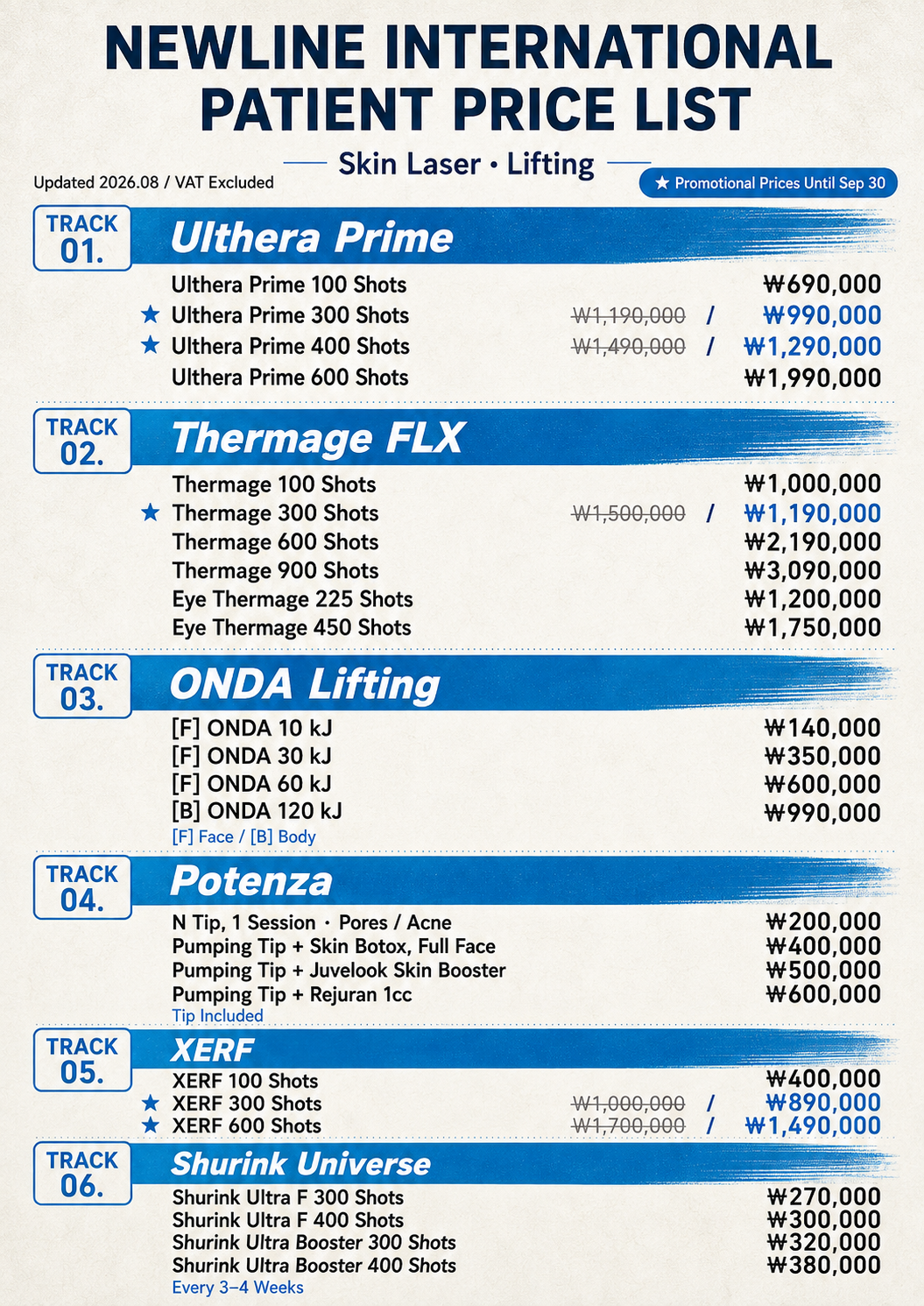
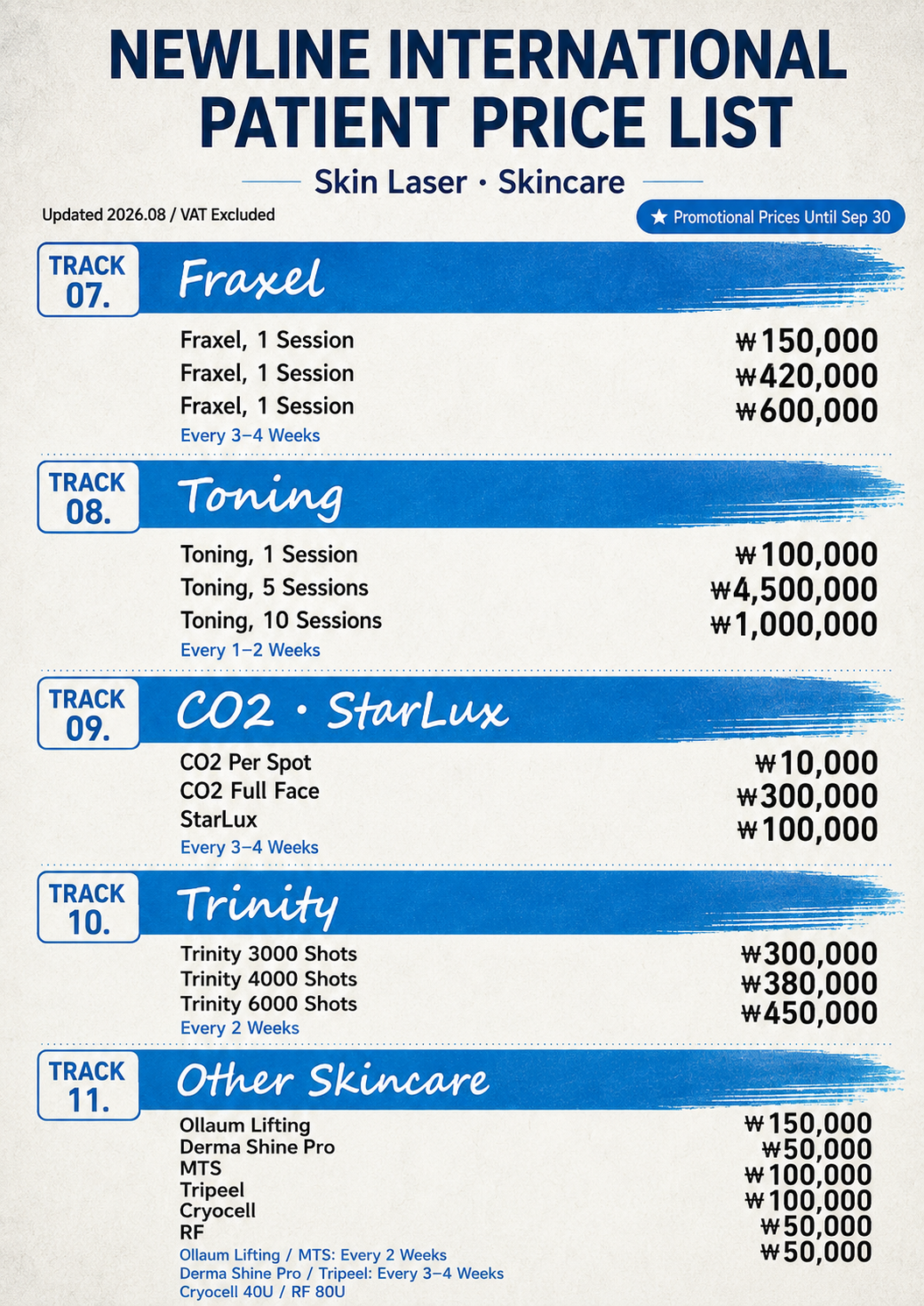
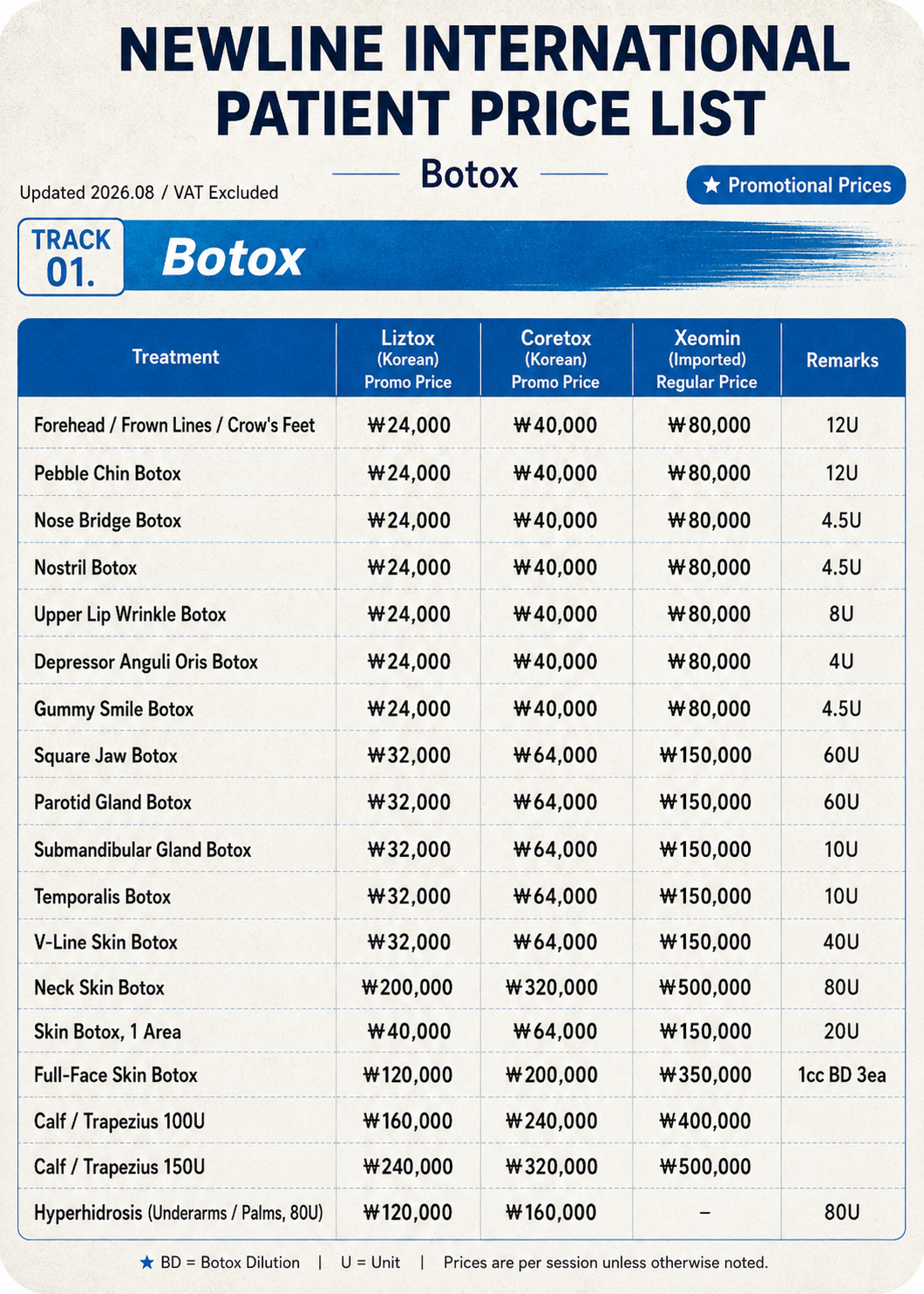
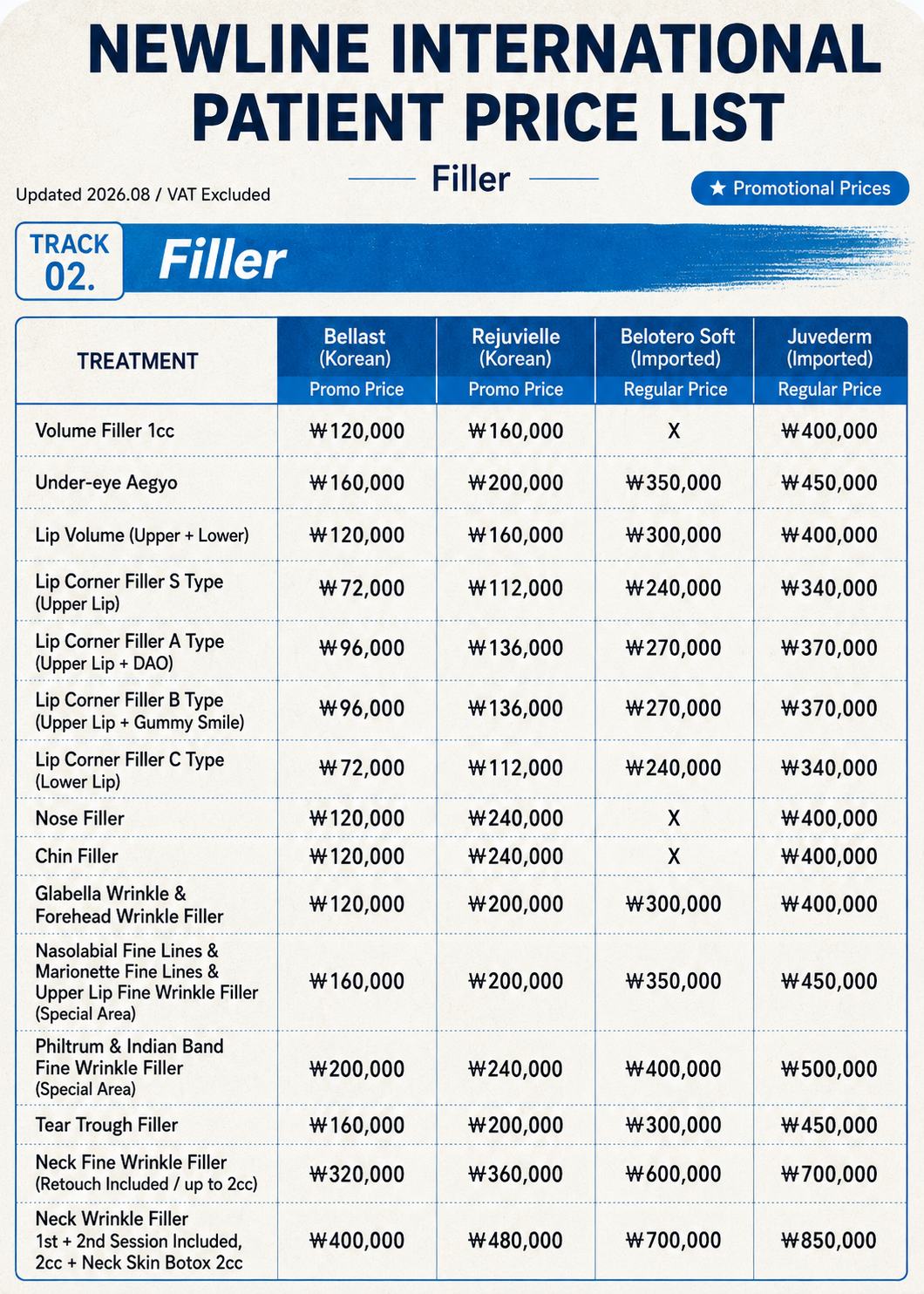
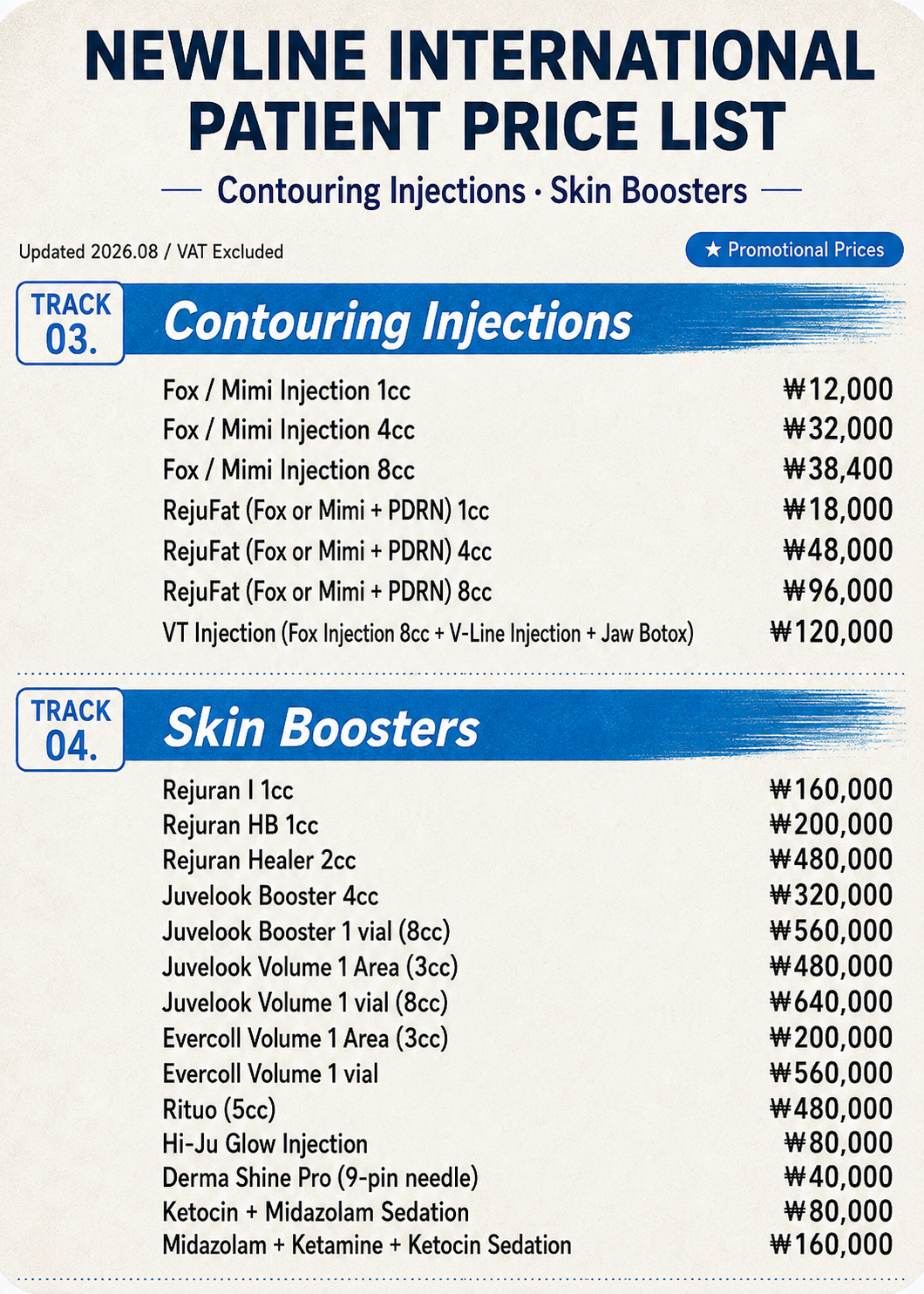
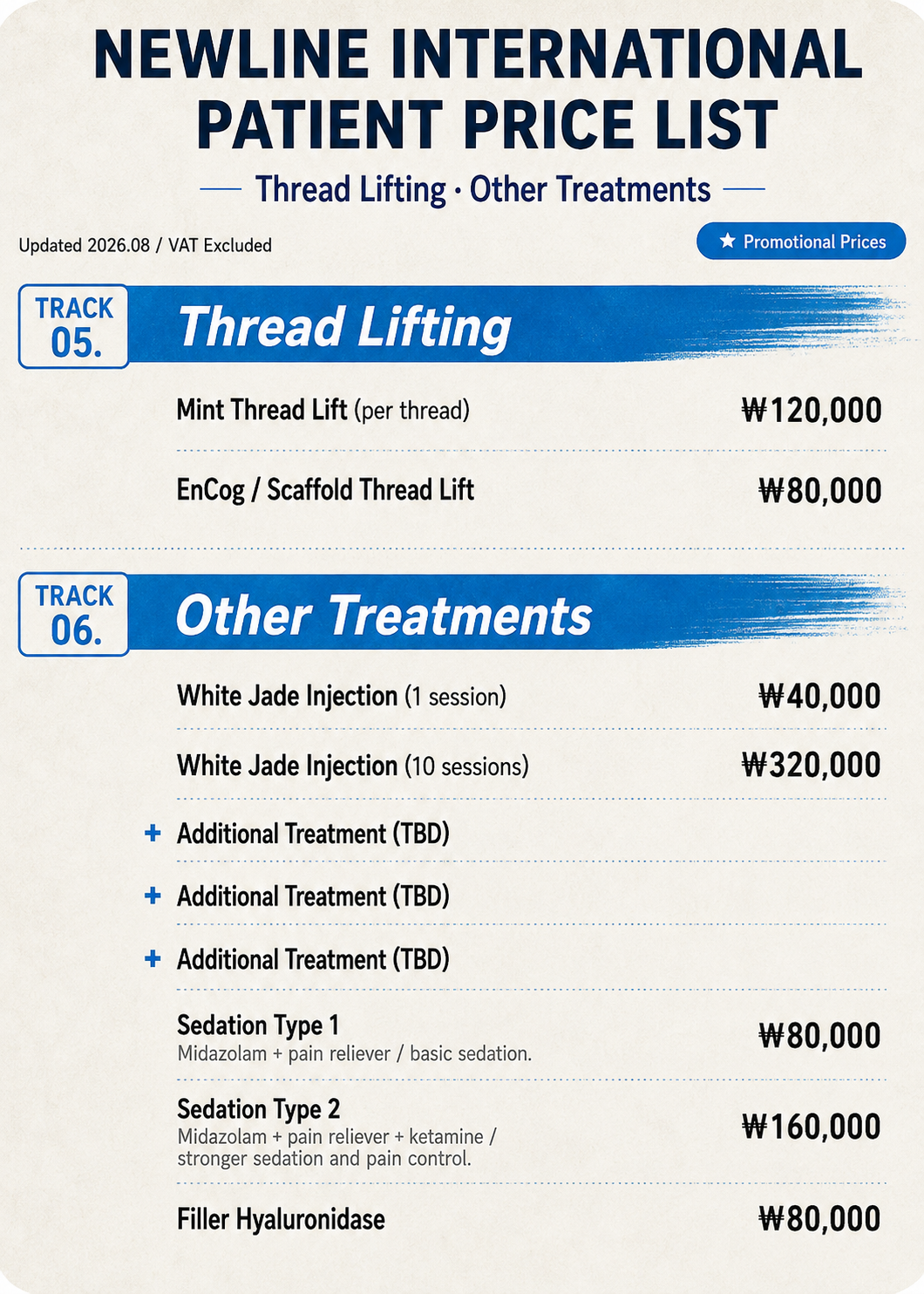
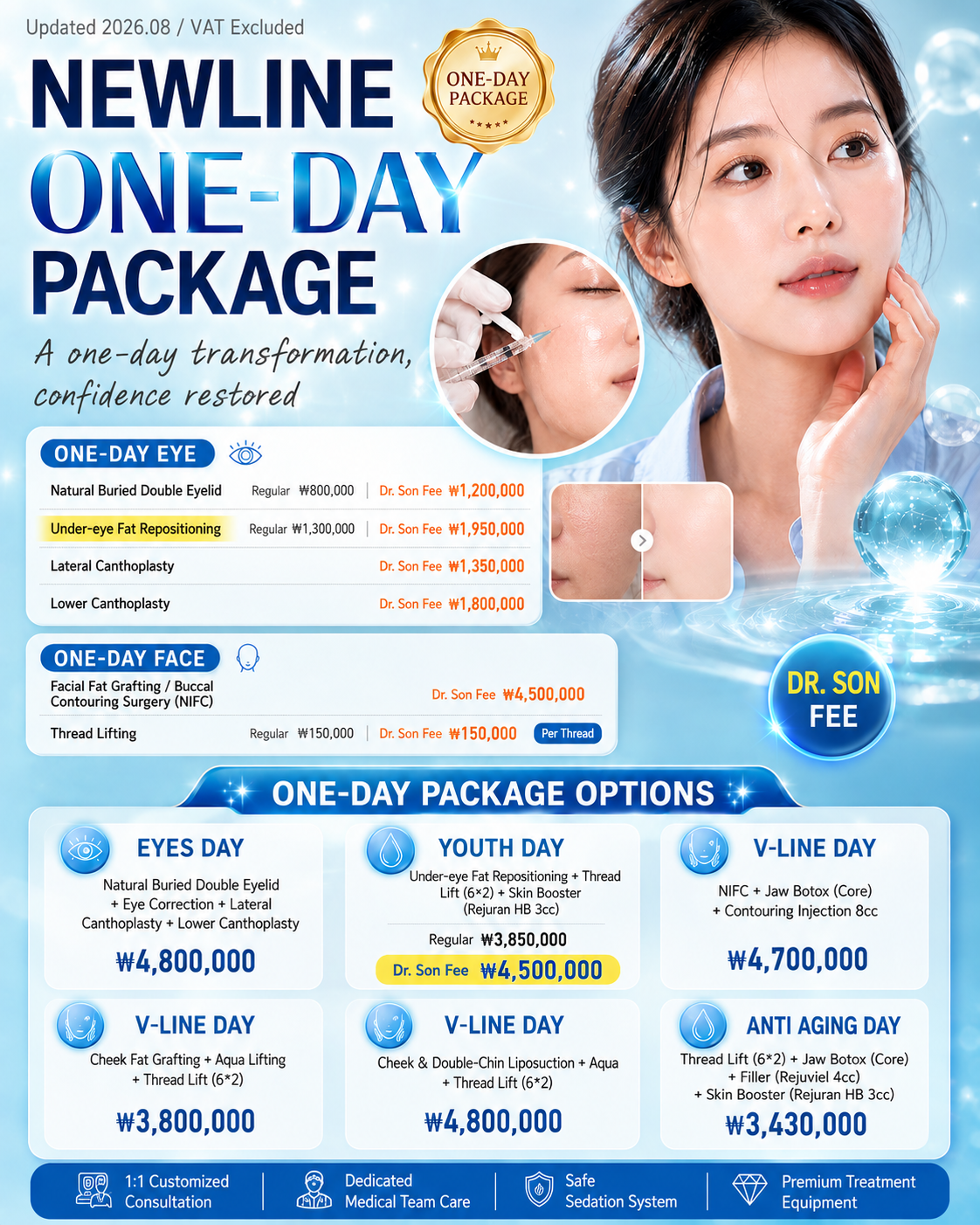
Newline's August 2026 international-patient price list gives a current reference. Confirm the final VAT-inclusive amount before treatment.
There is no rule that Year 1 should be single sessions or Year 2 should be series treatment. Plan according to the concern and your actual time in Korea.
Some procedures involve minimal visible recovery; others may involve swelling, bruising, redness or surface recovery. Consider teaching schedules, holidays and travel.
Combination treatment should only be used when each component addresses a clear concern. No automatic combination discount is claimed here.
If your contract is ending, share your departure date before treatment and ask how recovery and follow-up fit your schedule.
Confirmed options include selected facial areas, square jaw, Skin Botox, neck, calf/trapezius and hyperhidrosis treatment.
Confirmed options include Rejuran, Juvelook, Rituo and Hi-Ju Glow Injection. Product and amount should be confirmed individually.
Ultherapy Prime, Thermage FLX, XERF, Shurink Universe and ONDA are confirmed current lifting options.
Confirmed filler areas include lips, chin, nose, under-eye aegyo, tear trough, facial wrinkles and neck.
Confirmed categories include Fraxel, Laser Toning, CO2, Trinity, Potenza and MTS.
Mint Thread Lift and EnCog / Scaffold Thread Lift are listed in the current treatment information.
This page does not estimate whether treatment is affordable based on EPIK, GEPIK, hagwon or other teacher salary ranges.
Your treatment budget is personal. Newline does not prescribe a standard spending amount for teachers.
This page does not say that people in their 20s should never have ultrasound or RF treatment. Suitability depends on anatomy and concern.
This page does not rank Korean aesthetic medicine as one or two years ahead of Western markets.
Record the device or injectable product, treatment area, dose/shot count or volume where relevant, and treatment date.
Do not repeat a treatment automatically on a monthly, quarterly or annual schedule. Review whether it actually helped your concern.
If visible recovery matters, consider weekends, school holidays and important work dates before treatment.
If you are leaving Korea, ask what treatment documentation can be provided and what follow-up method applies to the procedure you received.
Send Newline your main concern, previous treatment history, preferred date and budget range. Ask which confirmed options are appropriate for your situation.
This page does not provide financial advice or a standard teacher treatment budget. Individual suitability, frequency, recovery and results vary. Confirm current treatment availability, final VAT-inclusive price and follow-up directly with Newline Clinic.
📞 +82-10-6757-4281
* Near Seomyeon Station Exit 7, opposite the rear entrance of Lotte Department Store Busan Main Store